I start every morning with four alarms. After snoozing my third alarm, I usually lay in bed, working up the motivation to move. I’ve never been a morning person, but MS has made it almost impossible to function. It feels like I am living life half-asleep all the time. I learned that fatigue is a significant symptom. I had no idea how hard it is to function being exhausted.
Napping often makes me feel so lazy, wasting all day in bed. Unable to get much of anything done. I have to try as hard as I can to start my workday. This is beyond not liking the morning. I cannot shake the groggy feeling and I hate it. I have a lot of challenging symptoms, but in my opinion, fatigue is one of the worst ones. Depression and fatigue go hand in hand for me. The more tired I feel the worse I feel emotionally.
Before MS
I HAVE ALWAYS BEEN A NIGHT OWL. UP ALL NIGHT AND ASLEEP ALL DAY, THAT’S HOW IT WAS. MY FRIENDS WOULD MAKE FUN OF ME, SAYING NEVER TO CALL MOYNA BEFORE 12 PM. OUTSIDE OF WORK AND SCHOOL, I HAD NO OTHER RESPONSIBILITIES. IT WAS NOTHING TO SLEEP UNTIL 2 TO 3 PM.
The now
My life is a lot different now. I have a toddler and am starting my path towards a career. I feel bad being constantly tired and unable to help with my son at times. Dealing with the stress of 2020 in general, then trying to cope/live with MS. It is almost too much to handle at times. The fatigue makes sense, but it does not make anything easier. Even something as simple as running errands can be utterly draining.
By the time the weekend comes, I am so physically, mentally, and spiritually exhausted, I have no drive to do anything. That leads to not seeing my friends and family often. Then I feel isolated and sad, fueling my depression. Everything spirals, and fatigue is at the root of it. So what do you do? I live life through napping frequently. I use to ignore my fatigue and push through the day. It was causing me to crash hard by the end of the day. I am learning to listen to my body and taking everything one day at a time.
I couldn’t get out of bed today but I did. I couldn’t walk on the treadmill but I did. Not because I wanted to but because I needed to push as much as I could. I did however get in the shower but I could not get dressed without tears of pain. Screaming for my husband to help me my body was frozen in such pain, legs numb and tingling, eyes blurred and hurting. It took thought to make my legs move, it was like my brain was not reaching them. He helped me to the couch slowly each step so excruciating my tears were uncontrollable. His eyes filled up with tears and fear. He gently helps me to the couch wincing as he does- scared he will make it worse. I lay there not because I am lazy but because I can not do anything else. I moved slow throughout the day each step hurts as my foot hits the floor, I can not feel it but the pins and needles remind me it is there. My face tingles to my lips causing me to feel like I am going mad, maybe today I am. The right side is not only numb but tingling so much. My right eye is blurry and aching, I am having floaters all day. The spasms in my leg jerk my body which makes my back pain sting. By the end of the day I am dragging my right leg and needing assistance walking even ten steps. I notice my clothes are on inside out but at least I am dressed. The kids make dinner and the worry sets in their faces. When mom can’t cook she is hurting in a way that scares them.
I work pushing through the pain. Laughing and trying to stay focused yet each breath is a reminder of the hurt while my legs are numb no matter how I sit. Work, pain repeat until I can not take it any more. I must sleep, laying down finding a spot that is not too awful I crash hard to the sound of kids playing, lawn mowers, birds things that usually keep me awake. Not today the pain, numbness, the tingling is overwhelming. My eye aching and the blurred vision was too much to take today. Is this how summer is supposed to be, where is my tan? Pain is exhausting, real exhaustion. I was a true spoonie today!
Just because I do not look sick does not mean anything. The pain is so real and intense I wonder why others can not see it. This is not a pity party; this is not searching for sympathy. This is nothing more than the reality of a relapse with MS. This is a day that I may seem fine on the outside yet inside my body it twisted in pain. Today there was no tiara.
 Close-up photo of the silver diadem with diamonds on a blue water background. Shallow depth of field added by macro lens for natural view

Makes 8 individual cups
Ingredients
2 cups chopped kale
1 garlic clove, thinly sliced
3 tablespoons olive oil
1/4 teaspoons red pepper flakes
8 large eggs
1/4 teaspoon salt
Dash ground black pepper
1/2 teaspoon dried oregano
1/4 cup goat cheese, crumbled
Preparation
1. Preheat the oven to 350°F. To get 2 cups kale, remove the leaves from the kale ribs. Wash and dry the leaves and cut them into 1/2-inch-wide strips.
2. In a 10-inch skillet, cook the garlic in 1 tablespoon of oil over medium-high heat for 30 seconds. Add the kale and red pepper flakes and cook until wilted, 1 to 2 minutes.
3. In a medium bowl, beat the eggs with the salt and pepper. Add the kale and oregano to the egg mixture.
4. Using a 12-cup muffin tin, use the remaining 2 tablespoons of oil to grease 8 of the cups (you may also use butter or non-stick spray if you’d prefer). Sprinkle the tops with goat cheese. Bake until they are set in the center, about 25 to 30 minutes.
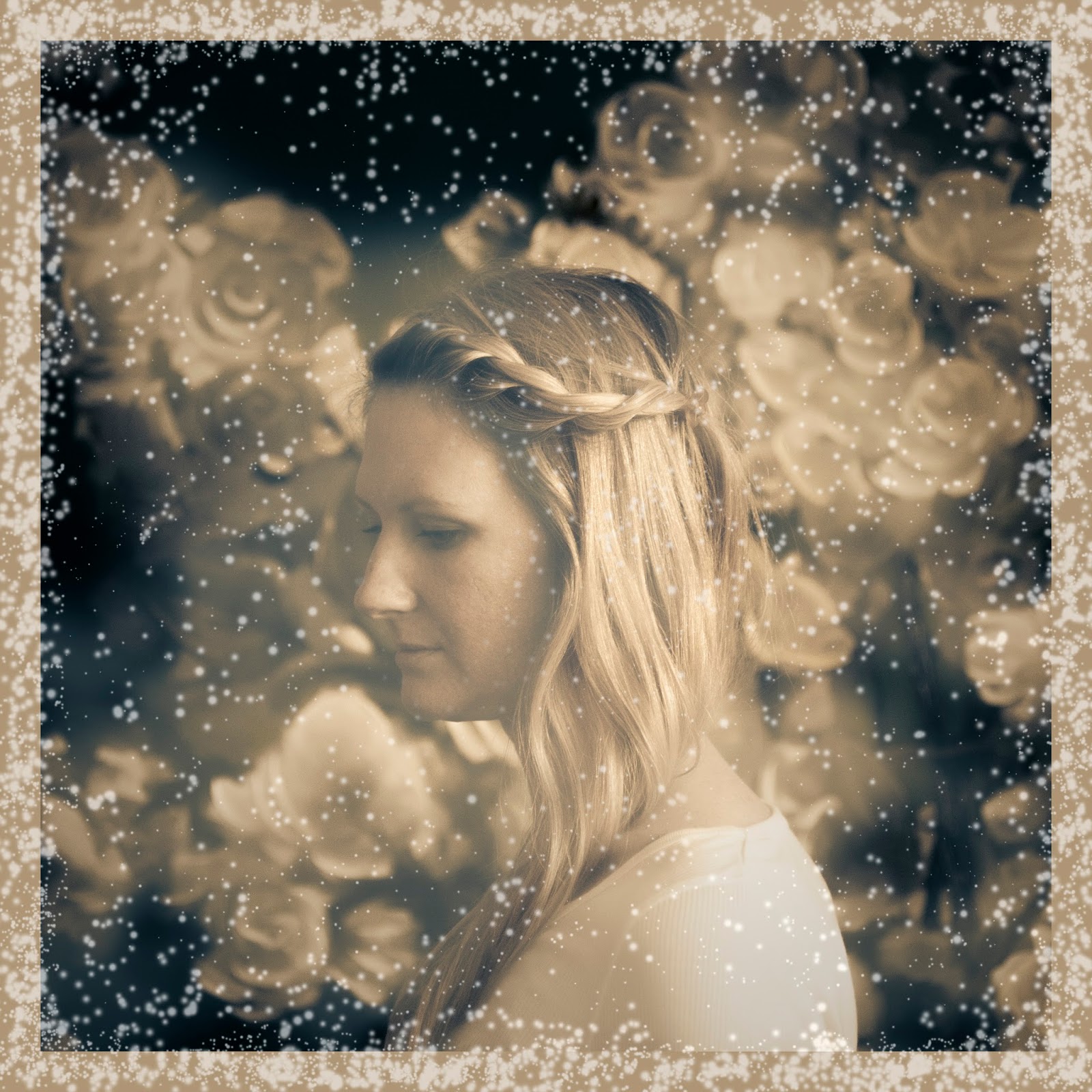
My sister Amber is back up at the Lyme treatment clinic with my mom, I’m sad that I can’t be with her so I am sharing a photograph I created of her last time we were in Reno with some of her thoughts to comfort myself and hopefully others in similar situations. Art therapy and appreciation for what she is enduring all in one. I highly recommend it for those who are looking to find relief and strength to carry on in the darkest of times no matter what medium you use, it helps to express yourself. A way to find the light.
Enjoy and stay strong and true to your journey my fellow healing souls. We are all in this together, all one.
– Amanda Brauning
Unraveling the Pain
Written by Amber Brauning
Unraveling the pain from years of an unexpressed universal love. The thoughts are generated but the words don’t match. I hold what feels like an ancient pain in my heart. A pain that has given me a feeling of hopelessness, contraction and fear. The heart holds onto the pain unable to express in words my true beautiful soul heart.
Time goes by and my words don’t come. The feelings are clear but remain unexpressed. My actions should speak louder than my words but often the actions are misunderstood or unnoticed. I remain powerless trapped in a world that doesn’t see my true seed of peace love and empathy. There is a reason I have been given the gift of feeling one way on the inside and the inability to express it to the world. Yet it remains a mystery that I know will soon be revealed.
I was recently guided into a deep meditation. Guided into the cave of my heart where the seed of peace lives. In the cave was a vivid image of a young girl malnourished naked and cowering down in the corner. She had no color in her skin and was dirty and animal like. She was afraid and spoke no words. She was joined by the present me who was glowing like an angel. I handed her a seed and told her I loved her.
She no longer needed to be afraid. She has been given the seed of peace and with that gift she was set free. Free from fear starvation and loneliness. Free to rejoin me and regain her strength. Free to shed her ancient tears but most of all to take back her power and step out of the dark and into the light.
Voice or no voice she is awakened and is welcomed out of the cave. As she emerges as do I.
Forever opened forever unraveled.
I’m sitting here in France after a whirlwind tour of Europe. We come here every year and it’s always a bit of a challenge to juggle suitcases, meals, train and plane travel with my daily diabetes management requirements. But besides a bit of grumbling, I take it in my stride.
This year though it’s been a bit more challenging. If you’ve ever been to Italy you’ll most likely agree that the food is incredible, the people deeply heartfelt and the scenery – BREATHTAKING! But try and get something practical done with a government organization? Forget about it! Last year I had a diabetes test strip debacle when my friend sent me test strips to an address in Italy. It took oodles of red tape to wrestle the test strips from customs, only to have them arrive after I had left Italy.
It was hard not to ruminate on this kind of madness when I tried to get a seat on a train from Milan to Cannes
Imagine, I’m ready for lunch, my blood sugar is a nice 6.0 mmol. I ask my beloved to wait with the suitcases on the platform while I pop down to the reservation center to get us a seat.
Oh my god! The reservation center was filled with at least 500 gesticulating Italians. I found a line which led to a guy who was passing out numbers. I told him I wanted a seat on the 3.10 train to Cannes, which apparently was impossible. I freaked out! My blood sugar was dropping, I didn’t have anything with me and I couldn’t get in touch with my partner to bring me my food.
What to do?
I hightailed it out of there and decided to sit in whatever seats we could find. We dragged our bags onto an overcrowded train and were of course sitting in someone else’s seats. Eventually we sorted everything out and landed in Cannes. But the trip took its toll.
Higher blood sugars, physical exhaustion, and feeling frustrated were the initial symptoms. But days later I am dealing with insulin resistance and the feeling that I just don’t want to have anything to do with diabetes!
For 8 years I have managed this disease with diligence and care. I’ve cried a ton, been angry, practiced yoga every single day, surrendered, you name it. But right now as I balance between something that feels like depression and anxiety, apathy and distress I think I must be experiencing my first bout of diabetes burnout.
It’s mild and in the background but it’s there.
I can’t ever imagine not checking my blood sugar, or ignoring my daily insulin injection. But I can feel some other form of rebellion brewing. And strangely it’s taking the form of inactivity. I am not signing up for the next webinar, not updating in facebook groups, not planning our next event. Not spending all my time on twitter, Instagram etc. I’m actually reading a book, sitting in the sun, baking flaxseed muffins, taking naps and staying in my P.J’s for most of the day.
And as my burnout morphs into relaxation, I’m wondering; is burnout actually the crisis we need to take a step back and make important changes in the way we manage our diabetes?
I know for myself that being so diligent can work against me. I try too hard to get perfect numbers. My whole life has been about doing my best.
When I take a step back and accept that some things are out of my hands it can almost feel like I’m flying blind. It’s a scary and fragile feeling. And reminds me of how it feels to ride on the back of a motorbike in the wind. Holding tight to the driver’s waist I close my eyes and trust that I’ll get where I’m going in one piece.
I know that living with diabetes isn’t quite like that, I mean you can’t just ignore it. But you can trust that sometimes the way you think about your diabetes contributes as much to unstable levels as the diabetes itself.
Talking with other people who live with diabetes is, in my opinion, one of the best coping strategies. Last month I met up with fellow Lyfebulb Ambassador Hanna Boethius whose lived with diabetes for 30 years. We started discussing the process of upping our basal insulin when morning levels get higher. She shared that even though we tell ourselves it’s something else, like stress or food or whatever, taking that little bit more insulin will bring the levels down. We don’t want to believe it because we want to take as little as possible, but sometimes you just have to suck it up, inject and trust that you’ll be okay.
Something that my partner has taught me through his own assimilation of the deeper aspects of yoga is that we forget that the body is bound by time. The physical practices keep the body as healthy and fit as possible for as long as possible. Yoga also teaches us that the body is a vehicle. We’re in the driver’s seat. The parts may wear out but the driver remains. Getting to know the driver is the richest aspect of yoga. We think that getting to know the driver is all about our likes and dislikes, who we are as individuals. But the purest teachings take it one step further and pose the question; who is it that is seeing, touching tasting feeling and driving this vehicle?
Whenever I really get stuck I go back to my mat and the feelings of “I’ve had enough” give over to pondering “whose feeling overwhelmed, frustrated and burnout?”
It’s amazing how that one simple question can unravel the knots, bring me back to what matters and reset my day. It’s not that I have all the answers but I do know what I’m not.
I’m not my burnout, nor am I my disease. I’m simply a person who lives with what ever comes along, doing my very best every single day.
Ice skating saved my life. I was introduced to the sport when my mom took me to watch my cousin compete. I was four years old. Soon after I took my first steps on the ice, and I never wanted to take my skates off. I didn’t, until doctors told me I had to.
I was diagnosed with Acute Lymphoblastic Leukemia at eight years old. It attacks quickly with signs of severe fatigue and bruising. I went from ice skating five hours per day, five days per week to barely five minutes, and the slightest fall caused the largest bruise. I don’t know how long it would have taken my parents to recognize the signs had it not been for ice skating. But really, does it matter? I’m alive. What does matter is that ice skating continues to be my savior in a myriad of ways.
My treatment protocol kept me in the hospital and isolated for weeks, and blood transfusions happened regularly. However, my life still revolved around ice skating and cancer was getting in the way of me reaching my dreams. Early in my treatment I suffered brain damage and was in a coma for about one month. Afterwards I needed rehabilitation to learn to walk again. I didn’t care about walking. All I wanted to do was skate.
My team of doctors gave me a firm “no.” I suffered from severe neuropathy so they didn’t believe I would be able to skate anyway. Then they saw the picture I drew for the Courageous Kids calendar, a calendar filled with 12 pictures drawn by kids in prolonged hospital stays.
 “I’d rather be skating than dreaming” was the caption. Doctors’ main concern was my extremely low platelet count, despite the constant transfusions, which meant that if I fell and hit my head, an uncontrollable brain bleed would occur. They said, “OK,” but vehemently told me to wear a helmet.
It turned out that I could skate better than I could walk. Physical therapists and doctors were mystified and dumfounded. I didn’t need rehabilitation. They needed to record me skating and try to understand what was happening. I don’t think I was wearing a helmet in the video. I valiantly competed for two years in subzero temperatures without a hat or hair. While most kids would have been petrified to be outside with a baldhead, ice skating didn’t allow cancer break my spirit.
Eventually I learned how to walk again. I completed treatment in two years and two months and lived a relatively normal life for five years. Each day started and ended with skating, with school in between, and in the evening I returned home for homework and dinner and sleep. I did well in school and increased skating levels fairly regularly. I battled constantly with fatigue and neuropathy and headaches and seizures, along with a host of short and long-term effects of chemotherapy. I was taught how to scan my body regularly for abnormalities. I thought I knew everything that might be thrown my way.
I wasn’t taught to scan my brain for post-traumatic stress disorder. When I was diagnosed with cancer, doctors consoled my parents saying “Don’t worry, you will see your daughter graduate from high school.” What they didn’t mention was that she might be graduating with PTSD. As it turned out, cancer did break my spirit. Suddenly passion burned out of my body. Ice skating no longer filled my heart with joy, and I turned to a psychologist for help.
When I arrived at George Washington University, I stopped going to therapy and dove into my pre-med requirements. Once I moved on from skating, I realized how badly my body hurt from an unfortunate combination of cancer survivor and figure skater aches and pains. My anxiety level was through the roof and in the middle of a sport psychology class, I experienced my first panic attack. Several days later my academic advisor noticed that I couldn’t stop shaking my leg and suggested I take a yoga class for a semester.
I laughed but took her advice because I didn’t see the harm. I began practicing yoga twice a week and immersed myself in classes like personal health and wellness, exercise psychology, medical anthropology, and preventive and integrative medicine. My focus evolved from western medicine to natural and traditional healing approaches. I introduced exercise and nutrition to childhood cancer survivors, yoga to socially disadvantaged populations, and resiliency training to those deployed into demanding environments. I learned about cultures that viewed epilepsy and flashbacks as blessings. I began to see my health conditions in a new light. I realized I had the power to take back control of my life by applying the skills I was teaching to others to myself.
And my life began to change.
I graduated from GW with a BS in Exercise Science and immediately moved to New York to start a Master’s in Public Health program at Columbia University. I started the program only to realize I wasn’t ready to take on the rigor. I needed to understand yoga and exercise more deeply to help myself before I could better learn how to help others.
That year I became a 500 hour registered yoga teacher and personal trainer. To this day, ice skating continues to move my spirit. In yoga, the poses and exercises that I found most transformative were those that mimicked aspects of figure skating. And, I finally recognized that figure skating was my form of meditation and, for four years, a major piece of self-care was missing. I went on to complete my MPH program at Columbia with a newfound systematic approach to design health interventions for people with chronic disease. All of my worlds coalesced and my path became clear. I was on the hook to teach others how to take control of their bodies to increase their quality of life.
Through countless hours of self-work, I accepted my body and its chronic conditions as limits that I had to work within. I strengthened the weak muscles that caused the aches and pains and moved my body in ways to minimize long-term side effects of chemotherapy without working so hard a seizure would occur. I live a mindful, balanced life, which allows me to live in moderation. I eat and move and breathe and meditate in ways that allow me to thrive.
Don’t get me wrong. There are days I want to rebel against my body, but I’ve learned it’s wasted energy. All of our bodies are beautiful, with or without chronic health conditions, and we have the power to heal ourselves as best we can. Far too often we forget to work on ourselves because we don’t know how. Nobody has ever taken the time to educate us, give us the skills, or provide a safe space for us to practice or learn. That’s what I’m here to do.
Working out in my case should always be enjoyable and satisfying, simply because that way it’s easier to achieve your goals. My working out routine changes depending on the time of the day. If I’m working out in the morning, I go more for a lighter workout that is more cardio based. If it’s at night, I go for a much harder workout that will take everything out of me.
In the morning I like to jog for 5 to 10 minutes then stretch, and then get into push ups, sit-ups, burpees, and squats. I do each exercise twenty times in three sets. Then I put my boxing gloves on and hit the bag for 4 to 6 rounds then Jump rope for 3 rounds of 3 minutes each, with 30 second rest in between. Then I stretch and that’s my light workout in the morning. 🙂
My evening workout is much harder than when I workout in the mornings. I like to start with a two to three mile run then jump rope for 3×3 minutes rounds with 30 second rest in between. Then I do 3×3 rounds hitting the boxing bag and after that I do 4 round of mitt work (pad work). My coach and I then finish up on the bag for two more rounds (every round has a 30 second break in between). I generally like to finish with 4 sets of 25 squats, 25 burpees, 25 push ups, and 25 sit ups. To finish my workout I like to do a good stretch and then when I get home I can fall asleep in no time. 🙂
For a person with diabetes I would recommend to reduce the amount of activity and increase the rest time to a minute in between each exercise. I am a professional boxer and that’s the reason why I work out this hard. A normal person who just wants to be healthy and fit does not need to work out as hard as I do. Just maintain a balanced, healthy diet, and a work out like my morning work out is more than enough!
Last week saw the launch of the Freestyle Libre in Australia. I was one of the few invited to speak to the media about my experience using the Libre (you can read my interview here). Despite contributing to magazine articles and blogs, doing interviews are something I get really nervous about. Especially seeing how diabetes have been reported in the past with terms like ‘compliance’, ‘lifestyle disease’, ‘diabetic’ and my absolute favourite: ‘diabetic sufferer’.
I live with diabetes. I manage it day to day the best I can and do everything to ensure it doesn’t hold me back from the things I want to achieve. Just like anyone else in life. Everyone has their own battles – that’s just life. But you don’t see news headlines labeling people as ‘life sufferers’.
To call me a diabetic sufferer implies I live in constant pain. Sure, it sucks to live with diabetes both emotionally and physically. But it’s also because of diabetes that I have become empowered in taking better care of my health. It’s because of diabetes that I have had the opportunity to meet very inspirational role models around the world. Because of diabetes, I have learned to be more grateful for things people take for granted like access to basic healthcare, education and supplies and moments of win with diabetes (aka not raging high after a kebab or pizza or pasta!).
I do not want pity from people when they hear that I have diabetes. I am just a normal person working hard to raise awareness of diabetes, hoping to make an impact in the world and who occasionally gorges on hot chips and chicken nuggets. Diabetes does not and should not define me.
Language plays such an important role for people living with chronic conditions. It has the power to inspire or isolate people. That’s why I’m grateful that Diabetes Australia developed and released a Language Position Statement five years ago.
Five. Freaking. Years. Ago.
Yet we still see endearing terms like ‘diabetic sufferers’ in the news. Living with diabetes is tough enough as it is. We don’t need to be throwing language around that makes people with diabetes feel that there is no hope in living an amazing life after being diagnosis. Because there is hope and many fine examples of people living a full life while managing diabetes!
Ingredients:
- 1 medium butternut squash
- 2 shallots, diced
- 2 garlic cloves, minced
- 2 t. dried OR 1-2 T. fresh rosemary
- 1 c. full fat coconut milk
- 1/2 – 3/4 c. vegetable broth
- 1/2 c. Nutritional yeast (optional)
- 1/2 t. salt
- 1 T. Coconut oil
Preheat oven to 375’F. Slice the in 1/2 and roast until tender. (you can do this step a day or two ahead. Take advantage of another time that you already have your oven fired up and save on running it twice in this warm weather!). Allow the squash to cool. Remove the skin and place the squash in the food processor or high speed blender.
Place 1 T. coconut oil in a large pan over medium heat; add shallots and garlic and saute. Add the other remaining ingredients to the processor/blender while the onions and garlic cook. Once tender, add the onions and garlic and blend until smooth.
For a gluten free, high nutrient meal:
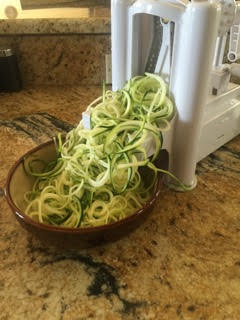
Spiralize or thin slice with a mandolin or peeler 3 lbs of zucchini and saute that in 1 T. coconut oil along with thinly sliced shiitake mushrooms. Once they start to become soften add the sauce and cook until tender!
I just listened to a song by Carla Bruni and it triggered many feelings that have nothing to do with the woman singing, the music, or the lyrics.
It triggered feelings of nostalgia for a time period of my life when things seemed to just get worse by the week, while I for the first time in my life, experienced the beautiful spring and summer time in Stockholm with no tennis matches, exams or business meetings.
In April 2007 I was on a business trip to the us while I was living in Sweden working in venture capital. I stopped by my parents house in Westport Connecticut on my way back to Stockholm but did not feel well. My feet were strangely swollen and when I arrived to the airport in New Jersey, I could not fit into my shoes. I had a terrible flight back to Europe and when I got to my apt in Stockholm I realized something was very wrong. My blood sugar was unmeasurable (indicated HIGH) despite having given myself insulin in a timely manner.
Back home I realized the insulin pen I had been using had not been dosing properly but had broken and thus no insulin had been injected for the past 24 hours or more.
I was now so tired and weak that I simply dosed myself with a new pen, put a bottle of water next to my bed and dosed off. When I woke up my sugar had become measurable but at the highest level of the machine I was using. As a doctor and a long term patient with type 1 diabetes I understood that I had been in keto acidosis and very close to going into coma.
The following morning I went to work but my state was still very weakened and I was in cold sweat all morning- so bad that I went to see my doctor acutely, who took my labs.
My hemoglobin was 6, meaning I was severely anemic and I was immediately ordered a blood transfusion which was administered by a childhood friend who was a nurse in the hematology department and she was the first one who noticed my blood pressure was 220/180!
The doctors were very concerned and immediately ordered a whole range of tests, from bone marrow biopsies to complex blood cell analysis since they thought I may have cancer of my blood.
My parents back in the US were very concerned and the next thing I knew, my mother was on a plane to Sweden to help me, which made me livid since I wanted no help and definitely not for my mother to move in with me. I could not stop her despite yelling on the phone and telling my father he didn’t care about me anyway (!).
It was my mother who pointed out the fact that my feet may be swollen due to my kidneys, not some disease of my blood. She asked me to test my urine with these urine sticks all diabetics are supposed to have at home, measuring glucose, ketones and importantly protein. Low and behold, the protein in my urine was at the highest measurable level and my mother and I went to the emergency room that evening.
At the ER my blood pressure was still 220/180 and the more exact measurement of my urine was showing macro proteinuria meaning the amount of protein leaking out through my kidneys were significant indicating severe kidney damage.
Now two weeks of exams as an in patient followed and after every single possible expert had had his or her say, a very wise older doctor said “you have kidney damage from poorly controlled diabetes, nothing more complex than that”.
After this diagnosis I was put on multiple drugs to halt and possibly reverse the nephropathy and told to manage my sugar very aggressively. My blood pressure was still elevated and my electrolytes poorly regulated and I was leaking protein through my kidneys.
For the first time over the 18 years since my diagnosis of type 1 diabetes I was affected by the disease in a severe and very concerning way. I went back to work after my stay in the hospital but a week later, when trying to read the paper in the morning, my vision was so blurred I called my retinal specialist for an appointment to examine my eyes. Kidney damage and eye disease often go hand in hand as complications of diabetes and I was very worried when I sat in the waiting room that same afternoon.
I was diagnosed with macula edema and severe, proliferative diabetic retinopathy that needed aggressive laser treatment to save my vision.
Now followed a period of laser treatments several times a week, on both eyes, each time rendering me blind for a few hours afterwards. My sister who lives in Barcelona came to see me, and came with me to one session and I could hear her crying when I was sitting in the chair while being “shot in the eye” with the laser gun.
My friends were concerned and my partners at the fund were worried. I kept going to work and even those times after the laser I would come back to the office in an almost pathetic way of trying to seem normal.
Before this period of physical decline, no one except my family knew I was diabetic, so it was naturally a shock for many to see me this way.
I continued with the blood transfusions regularly, tried to keep diligent blood sugar control although my sugars kept being volatile and treated my high blood pressure with the highest doses of multiple drugs to lower it. My whole system was disturbed and I was very nervous and stressed which did not help my recovery. I was told that I was a “walking stroke risk”, due to my blood pressure and was asked to avoid strenuous exercise and to try to “slow down”.
Finally, a wise friend of mine made me take serious time off. It was now the middle of June, and I asked to be off for the summer, which in Sweden is a time when people take between 4-6 weeks of holiday anyway. I tried to learn how to play golf, spent time with friends, ate healthy and watched an incredible amount of movies and caught up on TV shows. My future was uncertain but a plan was beginning to take shape in that I knew I had to get more directly involved in articulating the voice of patients and fighting for the acceptance of patients “at the table of decision-making” going forward.
It is now 9 years later, a new kidney, new pancreas and a pacemaker have been transplanted and implanted into my body, but I am back in shape and I am running a company, Lyfebulb, that intends to connect, inspire and impact people living with chronic disease.
I do not have to take insulin any longer thanks to the pancreas, and my blood pressure is stabilized and my new kidney manages well to take care of electrolytes and hemoglobin levels.
I will never forget that spring of 2007, but I have tried to avoid thinking about it since it was probably the worst time of my life to date. Thanks to my parents, sisters, my friends and colleagues and of course the doctors and nurses who treated me, I am alive and prospering. I hope no one ever has to go through what I went through that year, but memories from that time are beginning to trigger feelings of nostalgia instead of despair and I take that as a positive and a sign of human survival instincts.