The room was dark. There were no distinguishable sights or sounds. It felt like the beginning, when the earth was formless, the creation story I’d heard over and over as a child in Sunday school. Somehow I’d fallen into the formless void, the black nothingness. I couldn’t tell you where I was or who was there with me, all I knew was that I was there.
I. Was. There.
The last thing I remember before that moment was waiting to be taken into the OR. I’d already crossed the sterile line, through the double doors into the place where I had to do this alone. There was no one to carry me across the threshold, no one to sit beside me and hold my hand as I crossed over from one life to the next. It was only me, alone. I stared at the ceiling and tried not to cry. I concentrated on the sounds of the nursing shift changeover, with the morning nurses shuffling in with their hands full of coffee and the night nurses with their tired eyes grabbing their bags and heading towards the door. Back out of the land of transition, back into the world of the living. Something about waiting in that OR felt like sacred and holy ground. I kept waiting for someone to walk through the doors that I knew, for someone to come and talk to me to relieve my fears, but every moment I waited pressed into me the fact that I was alone for this part.
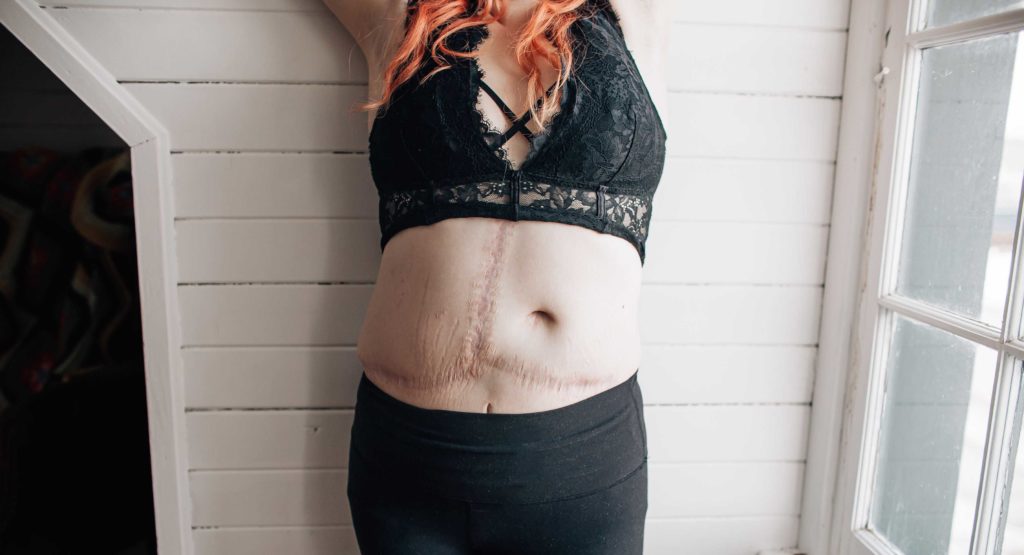
From what I know now, I was taken from that waiting room to the operating theatre. I was given a liver transplant, reconstructive surgery, a second liver transplant, all within a 4 day window. The liver ultimately inside my body now didn’t belong to my brother, like we’d all originally planned, but had formerly lived inside the body of a stranger who lived across the country from me. I spent weeks on a ventilator, fighting for my life in the subtlest and most obvious of ways.
And then I remember waking up. For all intents and purposes, I was alone for this part too. I had to carry myself over the threshold. I had to cross over all on my own, from one life to the next. The act of healing is a solitary journey. Doctors and nurses and loved ones cared for me but in the end this work was the kind I needed to do alone. And so I woke up, in this formless nothing, and I don’t remember much except that I felt new life stirring inside me. There’s no good way to describe it except for I felt like I was alive again. Right where my liver rests, I could feel what felt like a glowing, amber light that cradled my body from the inside out.
The 23 years I lived with Glycogen Storage Disease — a rare condition where my liver was missing the enzyme needed to turn glycogen into glucose — everyone always told me it didn’t hurt. My body wasn’t in any physical pain from the missing piece of my liver, that only the effects of this deficiency caused trauma. I believed them, after all they were the professionals and I was only a child. I didn’t know what it felt like to be in a body, didn’t know that this constant level of resonance and vibration wasn’t normal. But when I woke up after that surgery, my body still buzzing from all the pain killers and medications they had given me, I knew right away they had been wrong. There had been pain, I had distinctly felt the lack of that existed inside of me up until this point. And I didn’t feel it anymore. I woke up and without even knowing the outside world existed, I knew I existed. I knew I was alive, and I felt light and nothing hurt anymore.
It was like death, but better. It was rebirth.
Dr. Ryan Stoll is on a mission to make mental health accessible by all. He holds a PhD in clinical psychology and is the co-creator of COMPASS for Courage, an award-winning program that helps anxious youth become more resilient, confident, and courageous. As a PhD, his primary areas of expertise are in pediatric anxiety, prevention, and dissemination and implementation science. During his doctoral studies, Dr. Stoll founded Obeo Wellbeing, a social impact business committed to improving the public health impact of mental health research. Through Obeo, Dr. Stoll blends his research expertise with his passions in design, marketing, and social entrepreneurship to “reinvent” mental health science into consumer-focused solutions for people, organizations, and communities. COMPASS for Courage is Obeo’s first product.
Jan Samzelius, Founder, CEO and CTO of NeuraMetrix, has specialized in quantitative methods for 40 years. Jan invented the typing cadence technology of NeuraMetrix. He has led a large number of analytical projects, ranging from measuring customer satisfaction to price elasticities to conjoint analyses. Mr. Samzelius has invented many new ways of conducting research into complex issues. His largest project was directing a reinvention of the customer satisfaction measurement system for a telecom. The high quality of the data made the unions accept instituting a bonus system for 9000 people. During the late 90s, Mr. Samzelius led an effort to enable a computer to understand text. He has been the CEO of six companies, in several cases improving profits dramatically. His experience includes one turnaround and one successful exit. Mr. Samzelius holds an undergraduate degree in economics from the Stockholm School of Economics, graduating with honors and an MBA from Harvard Business School.
When Lucinda became her father’s caregiver at a young age, she struggled with the lack of resources available to her. Taking matters into her own hands, she created I Ally, an app for family caregivers that provides access to mutual aid, mental health services, financial & legal counsel, and peer support. She is a Founding Member of Tech Ladies, owns the social media marketing agency Got It Done Gal, and premiered a short film, Laura Point, at the Cannes Film Festival in 2016. Mrs. Koza is a committed advocate, speaker and thought leader on family caregiving, being a young caregiver, and the role of digital healthcare technology in transforming patient experience.
Chris Molaro, named a top 10 transformational leader of healthcare and a finalist for EY’s ‘Entrepreneur of the Year’ is the CEO and Co-Founder of NeuroFlow and on a mission to bridge the gap between mental and physical health. After five years of service and a tour of duty, he returned home to witness firsthand the devastating toll of an error-prone and inefficient mental health system in the United States. Afterwards, Chris went on to complete his MBA at The Wharton School at the University of Pennsylvania and launched NeuroFlow after graduating.
Chris is a regular speaker at numerous healthcare events, panels, and summits. Additionally, Chris has been a featured speaker for the American Psychological Association, Partners Health World Innovation Forum, interviewed on SiriusXM radio, NBC10, and in multiple healthcare and business focused podcasts, guest lectured at Penn’s Engineering school, and provided his expert opinion on CMS policies.
Jay Brown is the Co-Founder and Chief Marketing Officer of Health Behavior Solutions, a digital therapeutics company with health apps currently in clinical testing and development aimed at improving health outcomes for individuals with mental health conditions. Jay is the Program Manager at Texas Health Catalyst, an initiative of the University of Texas at Austin’s Medical School designed to help faculty commercialize their intellectual property and community startups get connected to clinical partners. He previously managed an undergraduate program at UT Austin designed to help STEM students learn about entrepreneurial principles and get experiential learning with science-based market discovery and prototyping.
As an entrepreneur with lived experience with depression, Jay believes that it is important to share his story with others in order to normalize the condition. He volunteers with NAMI Austin to share his personal experience of living with depression with the community, and has led peer support groups for individuals living with depression.
Rohan Dixit is founder and CEO of Lief Therapeutics, a mental health telemedicine company built around a breakthrough wearable device. Formerly a Harvard and Stanford neuroscientist, his work has been featured on The Today Show, CNBC, NBC, and CBS, and in The Atlantic and Forbes magazine. His primary focus for the past 13 years has been the intersection between mind-body interventions, science, and technology. As a repeat healthcare entrepreneur, Rohan has created wearable device products that monitor and augment mind-body interventions and have been used by thousands of consumers and patients.
Matt Loper is passionate about all things health. He co-founded Wellth in 2014 which uses behavioral economics to help motivate individuals to better manage their chronic conditions by building lasting, healthy habits. After receiving a BS in Biological Engineering from MIT he headed to Wall Street, working as a healthcare investment banker at Goldman Sachs and healthcare investor at OrbiMed Advisors. Matt enjoys tossing the frisbee to his mini Australian shepherd and surfing in his free time.
Lisa McLaughlin is a social entrepreneur and the Co-Founder and Co-CEO of Workit Health, a telehealth addiction care company creating an entire new channel for reducing drinking and drug use backed by the National Science Foundation. She is the recipient of the TechWeek Detroit Technology Woman of the Year award for 2017. Lisa serves as a Desai Accelerator Mentor for early stage technology companies and as an advisor to a number of biotech startups. Lisa has held leadership positions at some of world’s most respected digital health and learning companies. She developed one of the first social sector technology service models in the health informatics space and has facilitated a wide range of learning innovation labs for foundations (Gates Foundation, Hewlett Foundation) and universities. She has extensive training and experience in addiction research, crisis referral, alcohol and drug treatment aftercare, wilderness therapy, disaster response, and college completion. Lisa was previously an Innovation Fellow at the University of Michigan School of Information building social impact programs at the intersection of information science and social innovation (MSI/MSW).
Katherine, the Founder of ForLikeMinds, is an advocate, writer, and entrepreneur dedicated to promoting mental illness recovery and wellness. She is based in New York City. She was first diagnosed with major depressive disorder and then severe bipolar I disorder with psychosis over 15 years ago while in graduate school. She is in recovery. A first-generation high school graduate, Katherine has a BA, JD, and an MBA (Wharton). She is a qualified Barrister & Solicitor, New York Certified Peer Specialist-Provisional, and Certified Psychiatric Rehabilitation Practitioner. She has worked as a lawyer, foreign legal consultant, and entrepreneur in Toronto, São Paulo, and New York City. Katherine also serves on the Board of Directors for the National Alliance on Mental Illness of New York City, the largest affiliate of the leading mental health non-profit organization in the US.