Lyfebulb, in partnership with Columbia University, presents a virtual education series, sponsored by Veloxis Pharmaceuticals, to address key topics of living from late-stage disease through the transplantation process and beyond. Providing informative patient education is key to improving the patient experience, health communications, and health outcomes.
This session discusses different areas of advances in transplantation including tolerance induction, bioengineering, biological markers, regenerative medicine, and artificial intelligence (Al).
Engineering Tissues and Organs
The cells in the body create the tissue that make up our organs. The scaffold of each organ and tissue is the structure that the cells replicate on to create the fully formed and functioning tissue. And bioreactors are the chambers in which these components, combined with necessary regulatory factors that facilitate nutrient and oxygen availability to allow the cells to function, are combined to engineer new living tissue.
With this understanding, researchers tried to create an anatomically correct jaw bone in a pig. First, they removed the bone, cleansed it of all cells and living tissue, which left the scaffold. Then they took stem cells from bone marrow tissue or fat tissue of the pig and added it to a bioreactor culture and the scaffold. After a few weeks, it became living bone. Then, this bioengineered bone was placed back into the pig to see how it integrated with the native bone over time. Over the span of 6 months, the bioengineered tissue and the naïve bone were nearly identical.
In the human body, engineering tissues like whole organs is vastly more complicated. The lung, for example, has more than 50 cell types and a complex structure of airways and vasculature. There are 145 meters of gas exchange surface, which is half of a tennis court. With current technology and innovation, it’s not possible to engineer lungs, yet.
But, because of the shortage of organs that are suitable for transplant, instead of growing new organs, trying to repair organs that are rejected is the near-term future of transplant innovation and research.
This very intervention is being researched in lung transplant where the lung is placed on a ventilator and connected to the organ recipient’s blood flow for a few days to complete lung repair before it is put into the recipient patient. To test this, studies were conducted on weakened lungs that were out of the body for a considerable time, which leads to damage from blood loss. These lungs were connected to the patient externally using the method of rehabilitating the lung and after 24 hours the function of the lung dramatically improved. To determine the health of the lung, the pressure volume in the lung is tested to ascertain the quantity of much air flow.
Immune Tolerance
The immune system recognizes what is part of our body and what is not. There are proteins and carbohydrates on the surface of the organs of other people’s bodies that our immune system recognizes and tries to fight off when an organ is placed in the body for transplant. Research is being devoted into trying to reprogram our immune system so it doesn’t attack the transplanted organ and only attacks bacteria and viruses as it normally should. This is called immune tolerance.
So, how does immune tolerance work? Our bone marrow determines what is recognized as foreign and what is not. When we are born, the immune system hasn’t created immune memory yet, which is required to remember infections we have been exposed to so they can be fought off quicker in the future. These memory cells have to be reprogrammed to not have immune recognition and then reject the organ. To do this, bone marrow cells of the donor can be transplanted along with the transplanted organ into the recipient to minimize this immune recognition of a foreign body. Those unique proteins and carbohydrates from the donor are now part of the recipient’s body and will not reject.
In kidney transplant, there have been some studies done where kidney and bone marrow transplant were done together. Patients were able to stop immune suppression over time and they all developed immune tolerance.
Liver transplant is the most effective organ to transplant that will create spontaneous immune tolerance as this is where bone marrow stem cells survive. Research is also looking at what are the cells and inflammatory markers that are characteristic of people that don’t reject their organs. Hopefully, this can be translated to other organs in the future.
AI and Transplantation
There is technology being used that can predict future organ rejection. This AI technology is called AlloSure – a marker of donor organ injury and rejection. It is being developed to be used for all organ transplants, and currently is used in determining transplanted kidney health and function. Data is collected from the following results added together to predict, with 85% accuracy, if a patient will experience rejection present on a biopsy: kidney function at the time of biopsy, data history of rejection, antibodies against donor and DNA. The score determines whether the patient should be biopsied or not. A low value indicates a low probability of rejection, and a higher value where rejection is likely.
This technology would be used any time after the first 2 months and then quarterly after the first year. Data is collected every year after transplant to predict long term outcomes of transplantation. In addition, there will be less need for conducting long term trials in the future for new drugs and interventions as outcomes can be accurately predicted.
With advances in improving the shortage of lung supply, increasing regulatory collaboration, and improved transplant drugs, the future of transplant is bright!
Listen to the full webinar and learn more about these conversations and further research and information about life with transplant. This, and future webinars can be found on transplantLyfe.com/webinars.
Panelists
- Dr. Vunjak-Novakovic, Professor of Biomedical Engineering and Medical Sciences at Columbia University
- Dr. Griesemer, Professor of Surgery and Transplantation at Columbia, Head of Pediatric Renal and Liver Transplant.
- Dr. Srinivas, VP of Digital Development and Clinical Integration at CareDx
Moderators
- Mark Hardy, Professor of Surgery at Columbia University
- Dr. Karin Hehenberger, CEO of Lyfebulb and Visiting Associate Researcher at Columbia
Lyfebulb, in partnership with Columbia University, presents a virtual education series, sponsored by Veloxis Pharmaceuticals, to address key topics of living from late-stage disease through the transplantation process and beyond. Providing informative patient education is key to improving the patient experience, health communications, and health outcomes.
This session discusses three different areas of advances in transplantation including xenografts, islet cell transplants, and microbiotics.
Xenograft
Organ supply remains the number one unmet need in transplantation. Pigs are the most appropriate donor animal for xenotransplants. These types of transplants have been performed on patients who are brain dead and cannot donate their organs. Because they are technically deceased, the FDA doesn’t weigh in on this kind of research, so the data can be used to justify future clinical trials in living humans.
At NYU, a genetically modified pig kidney was put into such a patient to study how it would initially function in the human body. After 50 hours, there was no evidence of inflammation or rejection. In addition, two recipients received heart transplants from genetically modified pigs. Because of these recent experiments, interest has reignited for xenotransplantation, which is on the cusp of successful pig to human life-altering transplants.
So how are the pigs genetically modified? There are a number of companies that are gene editing the germ line, which means that the pigs have human genes permanently in their bodies and their offspring will as well. From this point, they can be easily bred for research purposes. They look like normal pigs; the only differences are that their cells produce some human proteins.
Unfortunately, with xenotransplantation, there will still be need for immunosuppression therapy, because the human body has an even stronger immune response to the transplanted pig organ than another human. There is some research investigating how the immune response can also be modified genetically to reduce the response.
Islet Transplantation
In pancreas transplantation, while the success rate is about 90%; there is risk of bleeding and other surgical complications. In order to reduce that risk, islet cell transplant was developed. This process involves taking the pancreas from the deceased donor, then taking the islet cells and infusing them into the liver of the recipient. They stay in the liver and produce insulin and modulate glucose levels. This type of transplant has been optimized for 20 years. Islets can provide long term insulin independence for patients however, immunosuppression for the patient is required.
Researchers are attempting to develop a way to make islet cells out of embryonic stem cells to have a greater supply of cells for transplant. Some companies are engineering islets from human stem cells, but there is limited success. Islets engineered from human stem cells would provide an unlimited supply, but would require the same immunosuppression therapy as normal transplant.
To circumvent the need for immunosuppression, using a pouch to immunoprotect the cells from the body of the recipient may avoid the need for immunosuppression. There is research being done in this space as well.
The outcomes for islet transplant are about the same as whole pancreas transplant, with about 60% of patients being insulin independent after 5 years but, the surgery requires experience from physicians and requires patient’s adherence to be successful as any other transplant.
Currently, the FDA has not approved islet cell transplant, so it is not reimbursable through insurance. Thus, often they are not able to be performed for patients. This issue requires legislative action to push FDA to approve islet transplant as the same as any other organ transplant to allow for insurance payments. The United States is the only country that is regulated in this way.
Microbiotics
In intestinal transplant the microbiome in the gut has been shown to be tied to rejection episodes. The intestines are full of bacteria, both commensal (good bacteria), and pathogens, (bad bacteria). There are bacteria that are vital to our survival; some of which help us break down foods, and some release chemicals that are necessary for the body’s functioning. This ecosystem of bacteria is called the microbiome. The interplay between the microbiome and the immune system is tied because an imbalance of the microbiome can cause an increase in immune cells or T cells, causing the body to be in an inflammatory mode versus a regulatory mode. One area of recent research is trying to determine whether rejection is due to the change that occurs in the gut bacteria populations when they are introduced to the recipient’s body’s gut bacteria.
There are immune cells that are specific to the bacteria that live in the gut and, when the immune cells die off along with the bacteria from the donor’s gut, in the recipient’s body, this can cause an imbalance and lead to rejection. This has been studied in liver transplant.
An overall decrease in diversity of bacteria, meaning fewer different types of species, is associated with inflammation. Rejection can be potentially modulated by restoring the balance of good and bad bacteria. It must be a targeted treatment of introducing certain foods and compounds that foster the growth of certain bacteria, which can then change the body’s immune response.
The next webinar session will focus on research into biotechnology and artificial organs with experts in the field.
Listen to the full webinar and learn more about these conversations and further research and information about life with transplant. This, and future webinars can be found on transplantLyfe.com/webinars.
Panelists
- Dr. Griesemer, professor of Surgery and Transplantation at NYU, Head of Pediatric Renal and Liver Transplant
- Dr. Piotr Witkowski, Director of the Renal and Pancreas Islet Program at University of Chicago
- Dr. Joshua Weiner, Assistant Professor of Surgery at Colombia, Head of Intestinal Transplant and an expert on microbiosis
Moderators
- Mark Hardy, Professor of Surgery at Columbia University
- Dr. Karin Hehenberger, CEO of Lyfebulb and Visiting Associate Researcher at Columbia
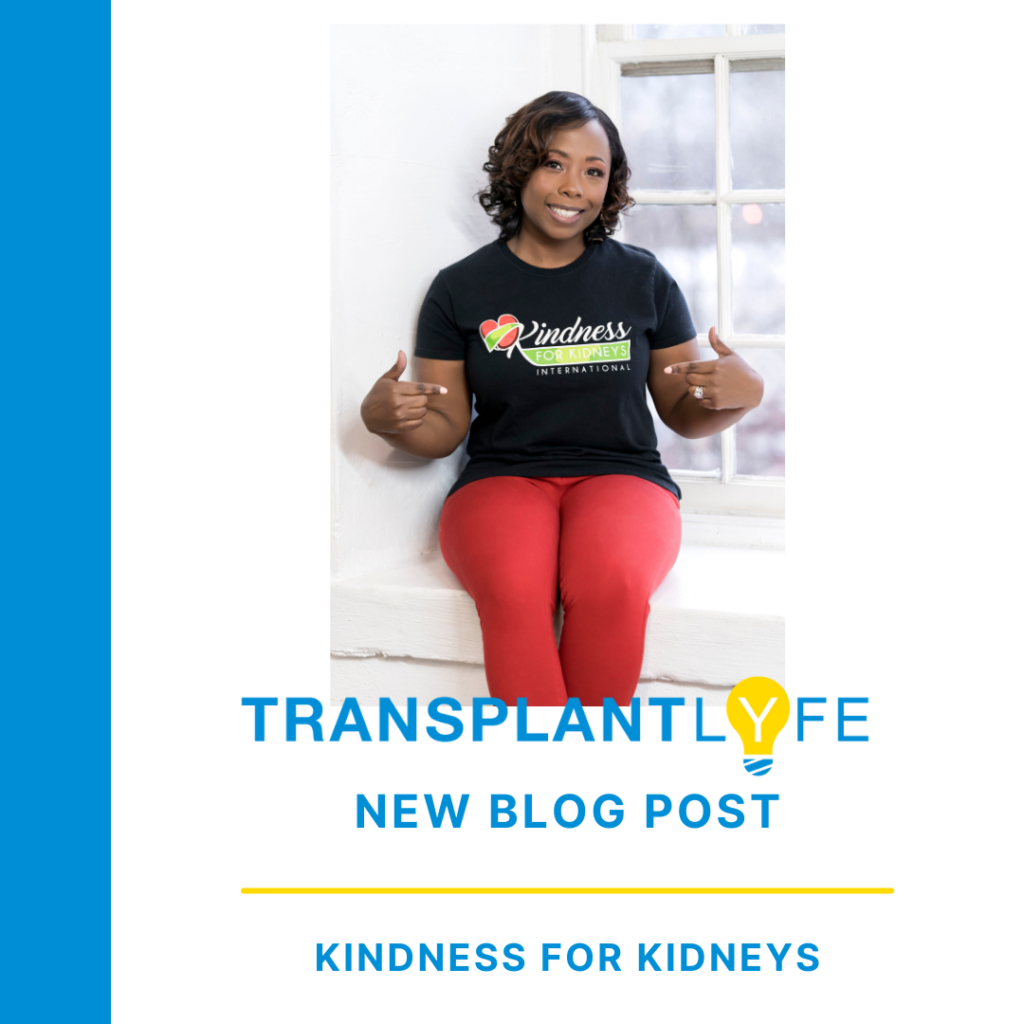
Recently I had the opportunity to sit down with Sharron Rousse, a kidney transplant recipient, advocate and the founder of Kindness for Kidneys, to discuss her journey of existing both personally and professionally within the transplant space. She has such a unique perspective, and story, and the kind of personality where, despite never having had a one on one conversation, it felt like we were old friends.
Sharron, who was born and raised in the Washington Metropolitan area outside D.C., was working in education as a school counselor when her first symptoms of kidney disease arose. After a “meet the teacher” night at the school where she worked, Sharron experienced swelling in her legs. It didn’t go away with rest, and she decided that after the following workday, she’d go to the ER. The plan was to work the entire day, but when Sharron arrived and connected with the school nurse, they advised her to clock out early and head to the emergency room immediately. Sharron said the event happened so fast and is a clear memory in her mind; after numerous tests performed at her local ER, a nurse pointed out that her kidneys were failing. Sharron, who had been diagnosed with lupus in 2003, had no indication there was anything wrong with her kidneys, but as more information was relayed to her, she began to wonder about the accuracy of her lupus diagnosis, and whether or not it was her kidney issues in disguise, resulting in the damage having gone unnoticed for so long.
She was transferred from her local hospital to John Hopkins, where she underwent more tests. The most likely option was that Sharron’s kidney disease was linked to lupus, but when she walked out of the hospital a week later with a diagnosis of FSGS (Focal Segmental Glomerulosclerosis: a rare disease attacking the filtering units of the kidney) the gravity of the situation became more apparent. Sharron was young, with no family history of the disease, having just given birth to her daughter a few months prior. This, she said, was the kind of thing that happened to other people. She was given a steroid cocktail, a combination with damaging side effects to her wellbeing, and did her best to resume a normal life in the face of a devastating diagnosis. It held her numbers at bay for a while, until 2011 when bloodwork revealed her numbers had begun to take a turn for the worse.
For Sharron it felt like a slow decline. She tried every alternative therapy in the book, sought second and third opinions. When it became apparent that dialysis was necessary, and a surgery date was booked to place a peritoneal catheter, she didn’t show up.
Instead she sought another opinion. She saw another doctor who ordered more tests, and one day the phone rang. It was that doctor, asking her how she was doing as her labs had come back and her hemoglobin was critically low. Sharron had reached the point of no return.
She remembers being in that hospital room, praying not only for her life to be spared, but also that she would someday be able to use her experience to help others. “My mindset shifted from focusing on me to helping others,” she said.
At this point peritoneal dialysis was no longer an option, and a perma cath was placed. Sharron began dialysis, and the journey of looking for a kidney donor began.
It was discovered that Sharron’s sister was a perfect match to be her kidney donor, but unfortunately the road was not that simple. The pair went through 5 transplant dates before the transplant was successful. The first date was rescheduled due to Sharron contracting an illness, the second and third because her sister had hemoglobin issues which made the surgical team uncomfortable. Sharron’s sister underwent bone marrow biopsies and saw multiple different doctors, and while Sharron tried to tell her sister that this wasn’t necessary, that she’d find another donor, her sister made it clear that this was her mission.
After months of waiting, the 5th surgery date was a go, and Sharron received her kidney transplant. It was on the 5th anniversary of their successful transplant journey, in December of 2018, that Sharron and her sister started Kindness for Kidneys. While she wasn’t clear exactly or what she wanted this to look like, Sharron wanted to give back to the community that gave her so much. She met with a team, tossed around ideas and applied for grants. They developed the ultimate mission of the organization: to educate, empower, and encourage other transplant patients and kidney warriors in their community and beyond. Sharron saw a need not only for patients to be knowledgeable about what was happening to their bodies, but also for caregivers to be involved. Conversations need to be had among families and in community circles, while at the same time encouraging representation within the transplant community.
“When it’s coming from someone that looks like you, you’re more apt to listen,” said Sharron. The African American community in particular is taught to be strong, to do what you need to do, and the approach Sharron found was one tailored to white presenting individuals. These conversations, she found, not only help those dealing with kidney disease, but also can also help prevent the disease entirely.
Kindness for Kidneys began with donating care packages to dialysis patients during the holidays. Their story quickly caught the attention of a local news crew, and within only a few years they were able to expand their Christmas hampers to multiple different dialysis locations. Just before the COVID-19 pandemic, Kindness for Kidneys started in-person support groups. They quickly had to alter the plan, but this unexpected detour was a blessing in disguise that took their support groups online, and global. The organization is now branching back into in-person support for patients and their caregivers, focusing on thriving with your condition and teaching on topics such as diet and mental health.
I asked Sharron where she wanted to be in 5 years time, and her first focus was on maintaining the vitality of her transplanted kidney. After recently transitioning into being self-employed, she is hopeful for a thriving business as she focuses on education and health consulting. Her ultimate goal for Kindness for Kidneys is to create a one-stop-shop wellness hub for kidney disease patients and their families, both in her local community and beyond.
You can connect with Sharron on Transplantlyfe, where she is an active member of our community. Their website is kindnessforkidneys.org, and they are on Instagram, Facebook, Twitter, and YouTube @kindnessforkidneys.
The Sweetest Gift is headed by Patricia Scheetz, herself both a chronic illness warrior and transplant recipient, having received a kidney and pancreas transplant in 2011 after battling with type 1 diabetes since birth and many of the disease’s insidious complications since her early 20’s.
Patricia is a qualified pastry chef, and discovered her passion for baking whilst recovering from her transplant surgery, fast forward several years and this passion catapulted Patricia onto Australian TV as a contestant in 2016 on Zumbo’s Just Desserts, which now airs on Netflix.
Discovering her life’s purpose to help people in similar situations to her own came after realizing that her dream of running her own dessert restaurant would be that much sweeter if she could support people just like herself, so that they didn’t have to go through the same employment struggles that she had been forced to, and so The Sweetest Gift was born.
Sharyn Kreitzer has 25 years of experience in the transplant field in both the private sector and VA programs. She developed a special interest in living kidney donation and has devoted her career to help increase access to living kidney transplants particularly for underserved communities.
In 2015, Sharyn helped launch the 7th kidney transplant program within the VA Healthcare System. While there, she realized the tremendous potential to tap into a vast military support system to launch a veteran-centric organ donor awareness program.
In 2020 Sharyn created Donor Outreach for Veterans, Corps (DOVE) a nonprofit organization with a mission to facilitate matching altruistic donors with Veterans awaiting transplant in the United States.
Sharyn’s clinical skills as a former transplant social worker, combined with her many years of experience in outreach, program development and administration has enabled DOVE to thrive in its first two years and has saved the lives of 21 Veterans since its inception.
Sharyn runs DOVE out of her home in Montclair, NJ where she lives with her partner, Thomas, her children, Nathan and Naomi, and their Labrador Retriever, Scout. In the last month, Sharyn has become a living kidney donor. She couldn’t be more proud to join this tremendously special group of people.
Dr. Scalea is a multi-organ transplant surgeon, innovator, and entrepreneur dedicated to saving lives. He is a professor of surgery and immunology and thought leader in transplantation. As a high-energy healthcare leader, he has a passion for building large, empowered teams that seek to dream big, improve efficiency, and exceed goals.
As an entrepreneur, Dr. Scalea co-founded 2 companies: MediGO, a healthcare supply chain technology company and MissionGO, an unmanned aviation and services organization. These rapidly growing ventures won the Thomas Edison award and MediGO was recognized by FAST Company magazine as a World Changing Idea.
Surgically, Dr. Scalea has worked with, built, and led some of largest organ transplant programs in the country. He is presently the director of kidney transplantation at MUSC, which performs 400+ kidney transplants per year. He has been nationally recognized for the highest quality pancreas transplant program in the United States, while also driving the highest volumes. He is presently Vice Chair of surgery where he helps faculty members understand the commercial potential of surgical innovations.
Within transplantation, Dr. Scalea and his quality teams are working hard to help centers scale operative volumes without sacrificing quality, by leveraging technology to enhance the peri-transplant workflow. Alongside bioinformatics experts, his quality team efforts are directed toward building tools that automate patient medical record analysis to instantly generate lists of patients who could be at risk for graft failure, tools for bidirectional patient communication, and enhanced patient education strategies.
Dr. Scalea is the Executive Medical Director for MUSC Health Solutions, an organization that assesses and commercializes internal technologies as well as early stage external technologies. In this role, Dr. Scalea helps guide MUSC Health Innovation strategic investments, and he guides technology development and implementation. Current investment activities include innovations in mobile-first patient-centered telehealth platforms, sleep science innovations, various MedTech concepts, and a technology-leveraged concierge surgical care model for elite athletes.
Dr. Scalea has led multiple Innovation and scientific ventures including the conceptualization, design, and development of the first platforms for monitoring and moving human organs. He envisioned, built tech for, patented, and subsequently performed, the first-ever transplant of a human organ moved by drone. This innovation was featured in the NYT, Fox, CNN, WSJ, JAMA-Surgery, and other scientific outlets. The media around this event went viral, generating more than 10M views in <48 hours, and with a PR reach touching an estimated 1 B people.
Beyond commercialization, Dr. Scalea is an NIH-funded director of a translational immunology laboratory and has published more than 80 peer-reviewed articles. Beyond studying organ logistics, Dr. Scalea is interested in eliminating the needs for anti-rejection drugs in transplant patients using novel fusion proteins which leverage the suppressive capacity of MDSCs.
Dr. Scalea is a loving father and husband who loves to paint and sail when he is not operating.
Genevieve C. Springer has a B.S. in Education, a Minor in Violin performance; a M.S. in Leadership and Policy from Vanderbilt University; and is now in the dissertation phase of her doctoral degree in Public and International Affairs. Her research interests hover at the intersection of democratic accountability, justice, public agency performance, and equitable health and social policy across regions. Professionally, she has served as project manager at Vanderbilt University’s Peabody College, an educator in both public and private schools teaching and designing interventions for at-risk youth, a researcher, humanitarian, and team leader. Grateful to be raised in a supportive close-knit family of creative entrepreneurial spirits. Genevieve in recent years has become increasingly and unapologetically driven to pursue goals that only call upon those skills and strengths meaningfully supported by her natural inclinations to create innovative lifesaving solutions. Genevieve’s most cherished leisure time is spent with her son Mateo, parents Terry and Bob, and Pitbull Susie in Chapel Hill, N.C.
Driving visions, actions, impact, and collaborations within biotech & life science to discover new opportunities and to develop better treatment opportunities. Entrepreneur, focusing on helping transplant patients live their life again. Synklino strives to provide rapid relief as well as to improve long term survival for transplant recipients by providing fast and safe eradication of cytomegalovirus (CMV) infections. Synklino’s drug candidate SYN002 efficiently eliminates both lytic as well as latently infected cells, and thereby potently inhibits viral replication and eradicates the virus – simply taking CMV out of the equation for the transplant recipient.
“I am always working to build and develop the strongest team, for what we are about to accomplish – focusing on our ability to execute our ambitious plans. At the same time relations to people, and working with committed, courageous, and skilled people is the greatest single motivating factor”.