The room was dark. There were no distinguishable sights or sounds. It felt like the beginning, when the earth was formless, the creation story I’d heard over and over as a child in Sunday school. Somehow I’d fallen into the formless void, the black nothingness. I couldn’t tell you where I was or who was there with me, all I knew was that I was there.
I. Was. There.
The last thing I remember before that moment was waiting to be taken into the OR. I’d already crossed the sterile line, through the double doors into the place where I had to do this alone. There was no one to carry me across the threshold, no one to sit beside me and hold my hand as I crossed over from one life to the next. It was only me, alone. I stared at the ceiling and tried not to cry. I concentrated on the sounds of the nursing shift changeover, with the morning nurses shuffling in with their hands full of coffee and the night nurses with their tired eyes grabbing their bags and heading towards the door. Back out of the land of transition, back into the world of the living. Something about waiting in that OR felt like sacred and holy ground. I kept waiting for someone to walk through the doors that I knew, for someone to come and talk to me to relieve my fears, but every moment I waited pressed into me the fact that I was alone for this part.
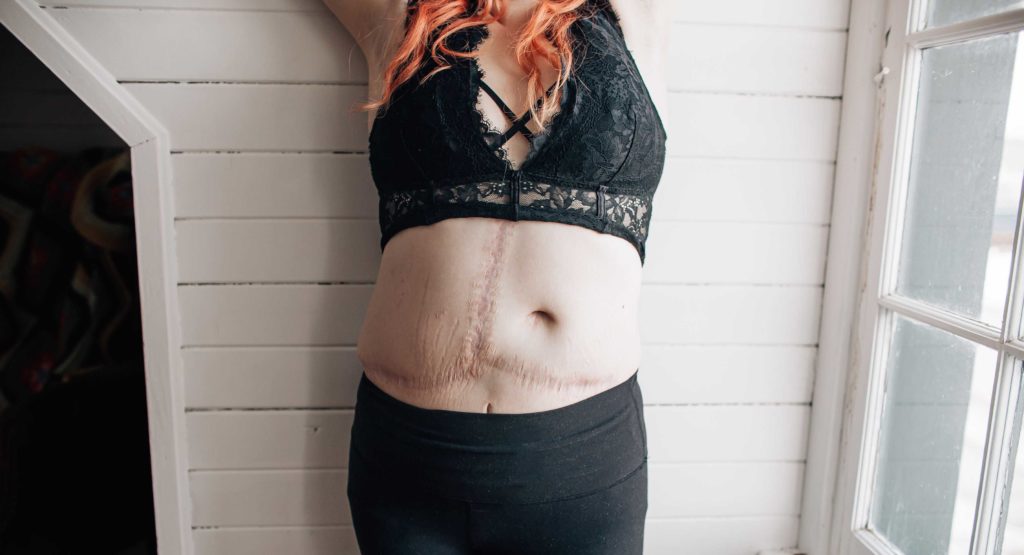
From what I know now, I was taken from that waiting room to the operating theatre. I was given a liver transplant, reconstructive surgery, a second liver transplant, all within a 4 day window. The liver ultimately inside my body now didn’t belong to my brother, like we’d all originally planned, but had formerly lived inside the body of a stranger who lived across the country from me. I spent weeks on a ventilator, fighting for my life in the subtlest and most obvious of ways.
And then I remember waking up. For all intents and purposes, I was alone for this part too. I had to carry myself over the threshold. I had to cross over all on my own, from one life to the next. The act of healing is a solitary journey. Doctors and nurses and loved ones cared for me but in the end this work was the kind I needed to do alone. And so I woke up, in this formless nothing, and I don’t remember much except that I felt new life stirring inside me. There’s no good way to describe it except for I felt like I was alive again. Right where my liver rests, I could feel what felt like a glowing, amber light that cradled my body from the inside out.
The 23 years I lived with Glycogen Storage Disease — a rare condition where my liver was missing the enzyme needed to turn glycogen into glucose — everyone always told me it didn’t hurt. My body wasn’t in any physical pain from the missing piece of my liver, that only the effects of this deficiency caused trauma. I believed them, after all they were the professionals and I was only a child. I didn’t know what it felt like to be in a body, didn’t know that this constant level of resonance and vibration wasn’t normal. But when I woke up after that surgery, my body still buzzing from all the pain killers and medications they had given me, I knew right away they had been wrong. There had been pain, I had distinctly felt the lack of that existed inside of me up until this point. And I didn’t feel it anymore. I woke up and without even knowing the outside world existed, I knew I existed. I knew I was alive, and I felt light and nothing hurt anymore.
It was like death, but better. It was rebirth.
Mary H. Wu is an ABC (American-Born Chinese) who was born, raised, and still lives in suburbia Westchester County, NY. She graduated with major studies in Psychology and Communications and minor in Sociology from Manhattanville Collegein Purchase, NY.
She enjoys working with people, and has an extensive professional background that includes working at a nursing home, a non-profit Medicaid agency that services children with severe medical illnesses, and presently at one of the regional sites of Memorial-Sloan Kettering Cancer Center
Mary was born with renal agenesis, which caused chronic kidney failure and the start of dialysis at 3-years-old. Her parents, who were immigrants from China, were told that kidney transplantation was the only option to save her life. No one, including her parents, were a viable match as a living kidney donor.
At 10-years-old and as a consequence of lifetime immunosuppressant medication of the transplanted kidneys, Mary was told she had osteoarthritis and avascular necrosis of the left hip, mild scoliosis of her back, and osteopenia of the lumbar spine. It was suspected years later that the core diagnosis leading to bone problems was left hip dysplasia congenital defect, secondary to renal agenesis and chronic kidney failure. She was told that she must undergo a total left hip replacement by the time she was 18-years-old.
Mary is presently 33-year-old and a two-time kidney transplant recipient from deceased donors, receiving her first transplant at 5-years-old and then her second at 12-years-old. In Spring 2013, Mary finally underwent a total left hip replacement surgery by means of an anterior procedural approach. She sought out and is a great supporter of alternative treatments, particularly osteopathy, due to the chronic arthritic pain that was dealt with for twenty years and especially in the last two to five years. In September 2014, she also underwent anpartial hysterectomydue to a suspicious for cancer rapidly growing mass in her uterus.
As a result of her personal experiences at a young age, she has a unique perspective and interest in both the organ donation/transplant and arthritis communities. Mary is greatly involved with various organ donation/transplant organizations, The Arthritis Foundation, and female physical body awareness and issues. She focuses on counseling and supporting organ donor families, pediatric or young adult recipients/candidates and their family/friends, and transplant recipients/candidates of various ethnicities and cultures.
Primarily in the organ donation/transplant community, Mary is always working to increase education, awareness, and especially registration through eclectic and published written articles, connections with political and celebrity figures, and mass and social media outreach. She was sponsored by the Los Angeles-based kidney research organization, UKRO, as their Donate Life Float Rider at the 2012 Rose Bowl Parade in Pasadena, California. Secondary to the organ donation/transplant community, she is active in the OB/BYN and arthritis communities.
In her free time, Mary enjoys swimming, traveling, politics/religion, writing, arts and crafts, and anything food and tea related.
Jazmin received her kidney transplant in late 2020. Six month later in March 2021 she is currently awaiting pancreas transplant. Her motto is “Drink too much coffee and love to laugh”.
Finalists will compete for a $25,000 award
NEW YORK, NY and KING OF PRUSSIA, PA, USA – March 24, 2021 – Lyfebulb, a patient-empowerment innovation accelerator that bridges the gap between patient communities and the healthcare industry, and CSL Behring, a global biotherapeutics leader driven by its promise to save and improve lives, announce the eleven patient entrepreneurs selected as finalists for the 2021 Innovation Challenge: Thriving with Transplantation.
- Dr. Nick Housby, Co-Founder & CEO of Accunea
- Dra. Isabel Portero, Founder & CEO of Biohope Scientific Solutions
- Patrick Sullivan, Co-Founder of HeartBrothers Foundation
- Alon Magal, Co-Founder & CEO of HeroKi
- Tim Fitzpatrick, Co-Founder & CEO of IKONA Health
- Dr. Ann Chokas, Founder of Life4ward
- Uwe Diegel, CEO of Lifeina
- Dr. Minnie Sarwal, Founder and CEO of Nephrosant
- Jack O’Meara, Co-Founder and CEO of Ochre Bio
- Scott Alpard, Co-Founder & COO of RealTime Clinic
- Dr. Petter Björquist, CEO of VERIGRAFT
Lyfebulb and CSL Behring’s mission within the Challenge is to identify new ways and meaningful solutions to help organ transplant recipients, donors, and family members better manage their numerous daily challenges and improve overall quality of life. The eleven finalists selected to compete at the Challenge were chosen based on the potential of their innovative ventures to address these issues, as well as their personal story sparking the launch of their company.
“Improving the transplantation process and empowering patients and their family members to succeed in their complex journeys is our ultimate goal within this initiative and partnership with CSL Behring,” said Karin Hehenberger, MD, PhD, Founder & CEO, Lyfebulb. “We see great potential in the solutions put forth by this diverse set of finalists to make a lasting impact on the transplant community and look forward to accelerating their development through this initiative and beyond.”
The finalists will pitch their companies’ solutions to an expert panel of judges comprised of healthcare industry, medical, and patient leaders on May 13, 2021. The jury will ultimately select one winner to be awarded a $25,000 monetary grant to further the growth of their company. The judging panel will include:
- Lloyd Ratner, MD, MPH, FACS, Professor of Surgery, Director, Renal and Pancreatic Transplantation at Columbia University Medical Center
- Jeff Hoffman, Partner, Chief Development Officer at Havas Health & You
- Lara Abounayan, Heart Transplant Patient Ambassador, Marriage and Family Therapist Associate at Healing the Hurt Consulting
- Stephen Squinto, PHD, Executive Partner at OrbiMed Advisors
- Alex Tulchinsky, Chief Technology Officer at United Network for Organ Sharing (UNOS)
“The range of ideas represented by these finalists is inspiring and demonstrates exactly why we partnered with Lyfebulb on this unique initiative,” said Kevin Kovaleski, Vice President, Global Commercial Development, Transplant, CSL Behring. “We look forward to these great concepts evolving into meaningful innovation for the transplant community and are proud to support this challenge that so closely aligns with CSL Behring’s longstanding commitment to innovation.”
Beyond the pitch competition, the Challenge will provide opportunities for the finalists and participating guests to exchange ideas and insights about how to further advance patient innovation in the transplant community and impact change. To learn more about the Challenge, please visit:
About Lyfebulb
Lyfebulb is an innovation accelerator that bridges the gap between patient communities and the healthcare industry by working directly with patients and care partners to generate insights and build new solutions to reduce the burden of living with chronic disease. Lyfebulb operates across 11 disease states and counting. See Lyfebulb.com, TransplantLyfe.com, Facebook, Twitter, Instagram, LinkedIn, and Karin Hehenberger LinkedIn.
About CSL Behring
CSL Behring is a global biotherapeutics leader driven by its promise to save lives. Focused on serving patients’ needs by using the latest technologies, we develop and deliver innovative therapies that are used to treat coagulation disorders, primary immune deficiencies, hereditary angioedema, respiratory disease, and neurological disorders. The company’s products are also used in cardiac surgery, burn treatment and to prevent hemolytic disease of the newborn.
CSL Behring operates one of the world’s largest plasma collection networks, CSL Plasma. The parent company, CSL Limited (ASX:CSL;USOTC:CSLLY), headquartered in Melbourne, Australia, employs more than 27,000 people, and delivers its life-saving therapies to people in more than 100 countries. For inspiring stories about the promise of biotechnology, visit Vita CSLBehring.com/vita and follow us on Twitter.com/CSLBehring.
For more information:
Lyfebulb Contact:
Karin Hehenberger, MD, PhD
CEO & Founder, Lyfebulb
Phone: + 1 917-575-0210
Email: karin@lyfebulb.com
CSL Behring Contact:
Jennifer Purdue
External Communications Manager, CSL Behring
Phone: +1 610-306-9355
Email: jennifer.purdue@cslbehring.com
Dr. Petter Björquist holds a PhD in Biology/Biochemistry from Gothenburg University, 50+ publications in peer reviewed journals, several book chapters, and patents. He spent 10 years within AstraZeneca R&D in Cardiovascular Diseases, 12 years at Cellartis/Cellectis as VP for Regenerative Medicine, responsible for the major collaboration with Novo Nordisk on the development of a human embryonic stem cell derived beta cell treatment for diabetes. As of February 2014, Petter has been the CEO of VERIGRAFT AB, a pioneering company within advanced tissue engineering, transplantation, and regenerative medicine.
With a background as a scientist in biology, Petter is very experienced in cells, how they can be mastered, and how they can be used directly and indirectly to cure diseases. On top of that, Petter has 15 years of experience specifically in stem cells, tissue engineering, cell therapy, transplantation, and advanced regenerative medicine from three different companies. In leading positions in each of these corporations, he has been able to bring products to the market, to bring stem cell therapies to a GMP setting, and to advance projects in this area to an industrial level. As VP for Regenerative Medicine at Cellartis/Cellectis, he was appointed alliance manager for the multimillion USD collaboration with Novo Nordisk and Lund University, a three-party project that he initiated and managed for nearly ten years.
Scott Alpard is an experienced innovator and entrepreneur with a successful track record evaluating emerging scientific discoveries and start-up and new venture development. He has over thirty years of experience in executive healthcare management and operations, medical device/product development and testing, research (basic science, translational, and clinical research) in academic medical centers, and healthcare and life science management consulting. Scott has also directed numerous medical device development and testing initiatives including creating and directing the artificial organ development program at the University of Texas Medical Branch where he published more than 125 scientific articles, abstracts, and book chapters, and has given more than 60 presentations. He has also co-founded four healthcare technology companies with two successful exits. He is currently the Chief Business Officer/Administrator for the Department of Breast Surgical Oncology at MD Anderson Cancer Center where he developed and directs surgical device and health IT innovation.
Scott has a BA from Emory University, a Master’s in Medical Science (MMSc) from the UTMB Graduate School of Biomedical Sciences, an MBA from the University of Houston, has completed the Life Science Entrepreneurship Executive Education Program at Rice University – Jesse H. Jones Graduate School of Management, and is a current PhD candidate at the University of Texas Health Science Center School of Public Health. Scott also founded and is President of The Cade R. Alpard Foundation for Pediatric Liver Disease, a 501(c)(3) non-profit organization, and is a Board Member for the American Society of Plastic Surgeons.
Jack O’Meara is co-founder and CEO of Ochre Bio. Ochre develops genomic medicines that rejuvenate transplanted livers, and ultimately hopes to treat fatty liver disease (NASH/NAFL) and other metabolic diseases. Ochre employs spatial sequencing, advanced genomics, and high-throughput screening to identify disease-causing genes and develops combination therapies which are tested in donor livers kept alive outside of the body. Jack is a biomedical engineer by training, with a background in bringing new healthcare innovations to market. His career spans management consulting, company creation, health technology and biopharma market launches. He has a BEng from National University of Ireland, Galway, and MSc from the University of Notre Dame.
Dr. Minnie Sarwal is a key opinion leader in clinical and translational research that focuses on native organ diseases and organ transplantation. She was Principal Investigator of the parent R01 grant (R01DK109720) entitled “CD40 Autoantibody and FSGS Recurrence.” Her training and decades-long contribution to clinical and basic science stemmed from her career both at Stanford University, where she was Medical Director of the Pediatric Kidney Transplant Program, and at the University of California San Francisco (UCSF), where she is Co-Director of the Kidney-Pancreas Transplant Program and Director of the Precision Transplant Medicine program.
Minnie is also Co-Director of the T32 training grant in Transplant Surgery. Her research has focused on mechanisms and biomarkers for understanding renal transplant injury, and on improving diagnosis and therapies for renal diseases such as diabetes, IgA, and FSGS, with a primary focus on improving diagnostics for solid organ and bone marrow transplantation. To interrogate biological systems, her lab is using multi-omic assays and bioinformatics. Her lab has published in high impact journals such as the NEJM, PNAS, Nature Medicine, Nature Methods, Journal of Immunology, Journal of Experimental Methods, PLOS Medicine, and Science Translational Medicine.