Challenge brought together 10 finalists who are building solutions for those affected by depression and anxiety
MINNETONKA, Minn., and NEW YORK (July 24, 2019) Lyfebulb LLC and UnitedHealth Group (NYSE: UNH) are pleased to announce that Rohan Dixit of Lief Therapeutics was selected as the winner of the “Addressing Unmet Needs in Depression & Anxiety: An Innovation Challenge.” Lief Therapeutics has developed an intuitive, data-driven wearable consumer product for anxiety used to teach the skill of mindfulness using heart rate variability.
Rohan was selected from a group of passionate innovators who were finalists in the Challenge, including Jay Brown of Health Behavior Solutions; Matt Loper of Wellth; Lisa McLaughlin of Workit Health; Katherine Ponte of ForLikeMinds; Jan Samzelius of NeuraMetrix; Dr. Ryan Stoll of COMPASS for Courage; Dr. Mehran Talebinejad of NeuroQore; Quayce Thomas of Timsle; and Keith Wakeman of SuperBetter.
Dennis Urbaniak, Chief Digital Officer of Havas Health & You, who served as Chair of the Jury commented, “Rohan not only has a mission and purpose that aligned with the criteria of the challenge, but also has taken a conventional approach and reimagined it through the patient experience with evidence-based science behind it. Additionally, he has identified viable pathways to commercialization.”
The Innovation Challenge was open to established companies of all sizes that are founded or led by an entrepreneur who has been affected by depression and anxiety, whether as a patient or through a loved one, and who has created a product or service to address an unmet need identified through personal experience. The 10 finalists gathered at UnitedHealth Group’s headquarters for two days of meetings, workshops and pitch presentations. The event culminated with a panel of esteemed judges selecting Rohan Dixit for the $25,000 award.
“Partnering with UnitedHealth Group for a second year in a new therapeutic area which impacts all of healthcare is tremendous for Lyfebulb,” said Dr. Karin Hehenberger, Founder and CEO of Lyfebulb. “We have established a community of people affected by and caring about depression and anxiety, from which we sourced ten exceptional patient entrepreneurs to join us in Minnetonka over the past few days. Their passion and determination to solve daily issues that burden so many individuals came through clearly during the pitches.”
The judges included experts from the patient, business and medical communities including Mike Christy, Senior Vice President of Venture Development at UnitedHealth Group; Dr. Raja M. David, Founder and Owner of Minnesota Center for Collaborative/Therapeutic Assessment; Matt Kudish, Executive Director at NAMI-NYC (National Association of Mental Illness); AnnMarie Otis, Patient Advocate; Dr. Bethany Ranes, Research Associate at UnitedHealth Group; and Dennis Urbaniak, Chief Digital Officer at Havas Health & You.
“Through this innovation challenge, we learned from patients and caretakers who live and breathe the challenges of this disease every day,” said Dr. Deneen Vojta, Executive Vice President and Chief Medical Officer of Research & Development at UnitedHealth Group. “We see depression and anxiety touch all populations we serve and we valued the opportunity to bring together entrepreneurs, health care providers, patient advocates and business leaders at the summit. Together, we can help bring the most innovative, effective tools – inspired by personal experiences – into the marketplace.”
Have you ever dreamt of working out with a trainer who understands diabetes, who might even live with diabetes, and who gets what it takes to get through a workout without wonky blood sugars?
Well, that trainer could be me!
Today, my 12-week fitness program “STRONGER”, that I developed for GlucoseZone, is available in the GlucoseZone app. I’d like to personally invite you to come train with me. To join me for a program that will push you to be a stronger version of yourself.
Sign up HERE and use the “STRONGER” code to get 30% off your monthly subscription
The beauty of joining GlucoseZone is that you’ll get access to not only my program but to 6 other exercise programs, as well as live workouts, all developed specifically for people living with diabetes. You can do all of the workouts in your own home or bring it to the gym.
Regardless of your fitness level, you can find qualified instructors to take you through the workouts that are right for you, and always with your diabetes in mind.
One of the reasons why I’m so excited about working with GlucoseZone is that it’s the first-ever clinically validated digital exercise therapeutic for people living with diabetes, and it’s endorsed by the American Diabetes Association.
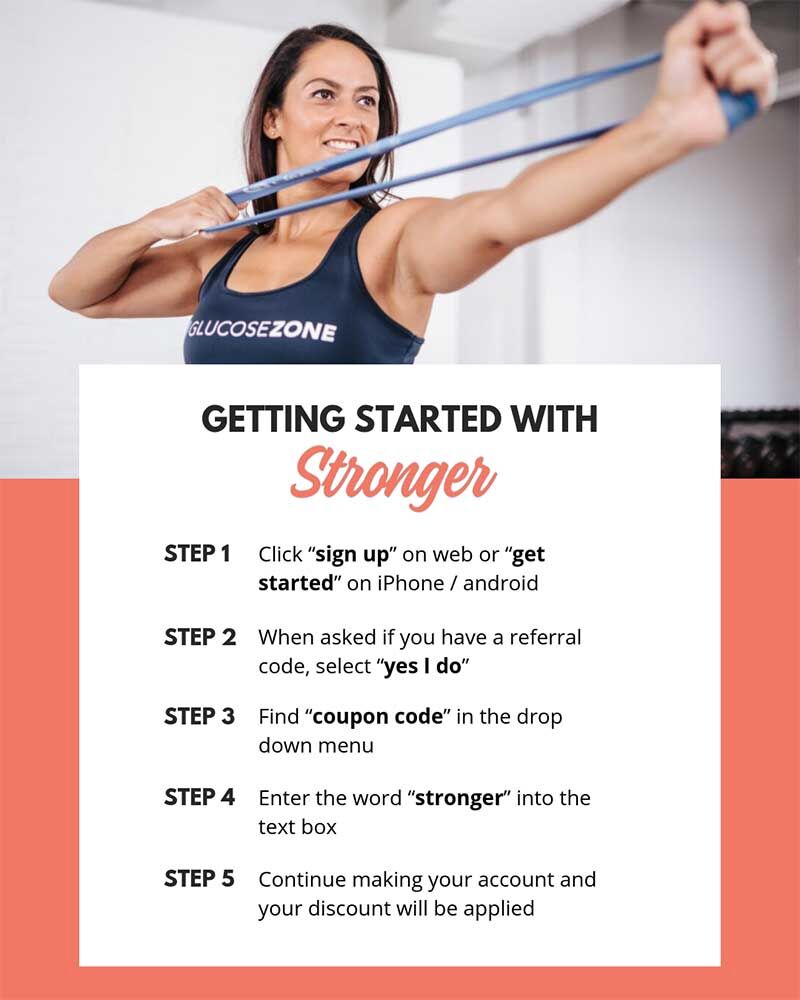
Sign up HERE and use the “STRONGER” code to get 30% off the monthly retail (You’ll only pay $9.09 per month) when you sign up for the GlucoseZone app.
Connect with Christel on Facebook: @DiabetesStrong; Instagram: @diabetesstrong_ig.
Living life on-the-go can be fun and busy, however, doing so with a chronic illness requires a few extra steps and planning along the way.
Hi, my name is David and I have been living with Type 1 Diabetes for 10 years now. I was diagnosed at the age of 11 and let me tell you… I have been through a lot. In living with this disease, I have been able to experience so much and learn from my mistakes. In doing so, I have come to realize that as a diabetic, I am one of those who should wear a medical ID and why it’s important for all life’s experiences.
For years on end, I never wore a medical ID bracelet. I could never find a bracelet that I simply liked or wanted to wear daily. When I became a part of the Diabetic Online Community (DOC) back in 2014, I was exposed to several different people who shared the same struggle. I also saw a variety of amazing brands and companies who understand this struggle and have found ways to make ID bracelets, dog tags, necklaces, and more so much nicer and pleasing to the eye and the patient. I own several different medical ID bracelets, I think when one finds their style with Diabetes, it’s always nice to have options and create your own look, which is why owning multiple forms of emergency ID that go with different looks is a great idea!
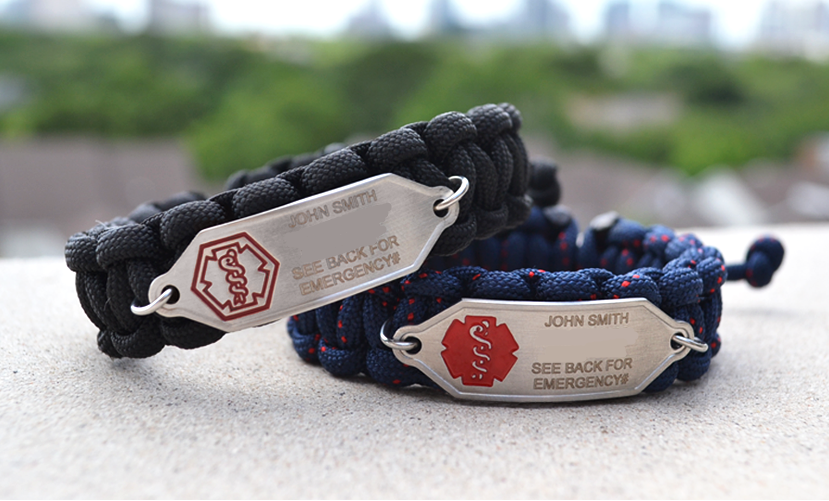
I have mentioned several times on my Instagram, @type1livabetic, that when wearing my personalized Paracord bracelet from American Medical ID, I felt so very safe. I felt as though if anything Diabetes-related could go wrong, I would be prepared. On my engraved bracelet, my name, condition, and emergency contact information were all located on a small piece of metal, attached to the Paracord bracelet. At a recent trip to Disneyland with a large group of people who also had Type 1 Diabetes that could vouch for me if there were to be an emergency, I still encountered times in which I was alone at the park (walking to and from my car, walking to meet the attendees, or simply stepping to the side to grab a snack), rest assured, I was confident with my Diabetes at the time.
So why is it so important to wear a form of medical alert jewelry for Diabetes? Well, not to get too dark or technical, however, the fact remains that we do have Type 1 Diabetes that does come with some symptoms and consequences. If our blood sugar drops significantly low, we could pass out and become unconscious or go into a coma. Same with high blood sugar, if we are severely high and go into DKA, we could in fact experience some symptoms that could limit our ability to function, which can prevent us from acting at the moment to get help. Say you were in public, alone, and you experienced one of these symptoms, if you were wearing a medical ID, someone nearby would most likely come to check for various hints or signs on you if something doesn’t look entirely right and search for an alert jewelry in particular sites on the body: wrists, around the neck, tattoos, etc.
In being diagnosed with any chronic disease and being told you have to take extra care of yourself can be a lot, however, allowing yourself some relief by wearing a form of ID can truly reduce a lot of the stress surrounded by various diseases. One should never leave the house without some form of ID as you never know when these emergencies could happen.
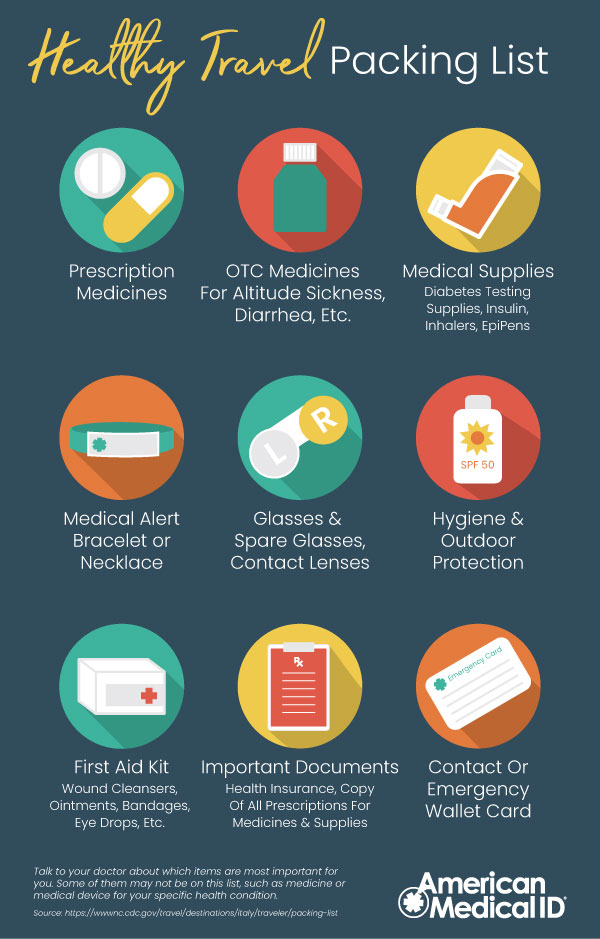
The CDC includes having a form of medical identification such as alert bracelets, necklaces, or wallet cards as part of a healthy travel packing list.
I believe that some may also feel safe in knowing that they have a medical ID card in their wallet as well, for added peace of mind. One should also wear a form of ID at home, just in case. For those who live alone, I understand that it may feel as though you are not in need of wearing an ID at home as you will be alone, but that could just be the very tool that can keep you alive, say you have an emergency, it could be that neighbor walking by and seeing something isn’t right that could barge in and save your life and being able to identify you have a particular medical condition that needs attention.
We each have our own busy lives that take up so much time and mental focus away from our health, which is why wearing medical alert jewelry can protect us as we are on the move, daily. School, work, the playground, a coffee shop, wherever you may be, ID is necessary. No matter how old the patient is, whether a child, teen, adult, or elder, wearing a medical ID all the time can protect us from the dangers of our diseases and more.
Live well,
David
Make this healthy, low-sugar recipe for your Fourth of July feast that is sure to be a crowd-pleaser!
Recipe by Lyfebulb Ambassador, Lindsay Hawker @runningpastcancer:
A fruit salsa that is both tasty and festive with it’s coloring being red, white and blue!
This sweet but refreshing salsa is great for parties and wonderful for kids to enjoy as well. Who says salsa has to be spicy anyway? It’s super easy to throw together and can be served with a side of tortilla chips.

Ingredients:
1 cup blueberries
1 cup strawberries, diced
1 cup jicama, diced – If you are unfamiliar with jicama, it is an edible root vegetable native to Mexico and commonly eaten raw (can also sub for peeled/diced apple).
1/4 cup cilantro, chopped
1/4 cup red onion, diced [optional]
1 lime, juiced
Salt to taste
Instructions:
Add all ingredients together, then wait 30 minutes before serving so all of the flavors have a chance to marinate and combine. Serve chilled and enjoy!
Cannabidiol (CBD), a non-intoxicating compound in cannabis, has become a popular alternative to pharmaceuticals. CBD users can sometimes find relief from their conditions without harsh side effects.
“41% of cannabis users surveyed report swapping out other medications completely in favor of cannabis, while another 58% use cannabis and other medication or alternate between them,” researchers stated in a survey by Brightfield Group.
While CBD may be a beneficial alternative for chronic conditions, it’s important to consider the implications of using CBD before changing your current regimen.
Diabetes
Studies have suggested that inflammation has a correlation with insulin resistance. This may be the result of the body not moving sugar from the bloodstream into cells, causing excessively high blood sugar. Obesity-related inflammation particularly limits glucose metabolism, resulting in high blood sugar.
Researchers still don’t know exactly how CBD improves insulin resistance, but often credit it to the compound’s anti-inflammatory effects.
According to a report on Type 1 diabetes from the Diabetes Council, “CBD can save insulin-forming cells from damage so that normal glucose metabolism can occur.”
It’s important to note that most claims being made are based on studies with animals, not humans. Using CBD to treat diabetes without more substantiated research and medical oversight could be dangerous. Until further human studies are conducted, CBD can’t be considered a direct treatment for diabetes.
However, the anti-inflammatory effects of cannabidiol may be beneficial for managing secondary symptoms from the disease. For example, CBD has neuroprotective qualities and may prevent retinal damage.
Cancer
While there is anecdotal evidence of successfully treating cancer with CBD, no definitive studies can back this up. However, we do know that CBD plays a role in cancer prevention and seems to have anti-tumor effects. In a 2012 report, researchers explained, “Evidence is emerging to suggest that CBD is a potent inhibitor of both cancer growth and spread.”
The U.S. National Library of Medicine explains that CBD is anti-proliferative, meaning it can stop, slow down, or reverse the growth of cancerous tumors. It is also anti-angiogenic, meaning it does not support the generation of new blood vessels, specifically ones that allow cancerous tumor growth. Lastly, it is pro-apoptotic, which means it induces cellular suicide of cancerous cells.
In addition to these cancer-specific effects, CBD may help patients dealing with pain related to cancer treatment, such as pressure on the organs and nerve injuries. Patients with cancer are commonly prescribed opiates to manage pain, but managing pain with CBD may be just as effective with fewer side effects.
Unlike opiates, which mimic our bodies’ natural endorphins, CBD actually encourages the production of natural endorphins by interacting with a neurotransmitter called anandamide. As a result, CBD is a non-habit-forming pain-reliever.
It’s important to consider the legal implications before using CBD for cancer, or any other chronic condition. Hemp-derived CBD is legal across the United States, with specific guidelines per state. Idaho, Nebraska, and South Dakota have strict, conflicting rules regarding CBD, so caution should be taken if you live in those states.
Whatever state you’re in, be sure to get high-quality CBD from producers who follow the guidelines of the law.
Multiple Sclerosis
According to Neurology.org, “inflammation occurs in the brains and spinal cords of people with a specific kind of MS called relapsing-remitting MS.” CBD has been shown to protect against this harmful inflammation.
In a 2011 study with mice, researchers found that CBD diminished axonal (nerve) damage and inflammation. CBD also reduced microglial activation, an inflammatory process that occurs in the central nervous system and is attributed to conditions like MS, Parkinson’s, and more.
CBD may help users get relief from their MS without causing the sometimes intense side effects that come with pharmaceuticals. Still, CBD may cause some side effects that users should be aware of. Side effects may include:
- Anxiety
- Changes in appetite
- Changes in mood
- Diarrhea
- Dizziness
- Drowsiness
- Nausea
Anxiety and Depression
The hippocampus, the most widely studied portion of the brain, is responsible for the regulation of memories and emotions. Researchers believe the hippocampus plays a major role in depression, and have found that this region of the brain can shrink or decay in those with depression.
Fortunately, the shrinkage does not have to be permanent. The brain is very regenerative and can bounce back as new neural connections are made. This process is known as “neurogenesis” and is an important process to target for antidepressants, contrary to the prior belief that they just work to increase serotonin.
Where does CBD come in? Research has shown that cannabidiol signals a serotonin receptor called 5-HT1A. This receptor is responsible for controlling many neurotransmitters, and is also the target of some anti-anxiety medications, like Buspirone. Activating this receptor can encourage neurogenesis, and potentially relieve symptoms of anxiety and depression.
While each individual case is unique, anxiety and depression tend to go hand-in-hand. CBD may encourage the neural regeneration necessary to find relief from either or both conditions.
Inflammatory Bowel Disease
Inflammatory Bowel Disease (IBD) is caused by — you guessed it — inflammation. A 2009 study found CBD was beneficial for colitis, a form of inflammatory bowel disease. Researchers induced colitis in mice and tracked their gut inflammation, finding that “cannabidiol, a likely safe compound, prevents experimental colitis in mice.”
Another review found “this compound may interact at extra‐cannabinoid system receptor sites, such as peroxisome proliferator‐activated receptor‐gamma. This strategic interaction makes CBD as a potential candidate for the development of a new class of anti‐IBD drugs.”
If you’re considering using CBD with other medications, consult your doctor first. Much like grapefruits, CBD inhibits the cytochrome P450 enzyme, which can prevent drugs from metabolizing properly.
CBD could also negatively affect the liver by increasing liver enzymes. A 2014 review of CBD saw changes in the liver function of 10% of the subjects, and 3% had to drop out of the study to prevent further damage. Again, consult with a doctor if you want to use CBD for a chronic condition like IBD but are worried about the effects on your liver.
The Bottom Line
Americans spend around $1,200 on prescription drugs each year, which is more than the residents of any other developed country. The price of pharmaceuticals has risen without any improvements or innovation, according to CNBC. This makes CBD an exciting avenue as a potential alternative to standard pharmaceuticals.
It’s important to remember that the effects of CBD will vary by person, and that a lot of the claims we hear about CBD are in relation to animal studies and not humans. It’s also important to be as informed as possible before diving into the complicated world of buying CBD.
Still, many people find success with CBD for their chronic conditions.
 Macey is a freelance writer from Seattle, WA. She writes about natural health, cannabis, and music.
Dear Lyfebulb Community,
EXCITING NEWS: We have chosen the 10 finalists for our Innovation Challenge with UnitedHealth Group in Depression and Anxiety! Listed below, each of our Patient Entrepreneurs were selected because of their personal connection to Depression and/or Anxiety that inspired them to innovate in the mental health space to satisfy an unmet need in the patient community.
- Health Behavior Solutions, Jay Brown – Digital therapeutics company with apps aimed at improving health outcomes for individuals with mental health conditions
- Lief Therapeutics, Rohan Dixit – Smart patch that tracks and improves biomarkers of mental health
- Wellth, Matt Loper – Digital health company using behavioral economics to help motivate individuals to better manage their chronic conditions by building lasting, healthy habits
- Workit Health, Lisa McLaughlin – Telehealth addiction care company that provides medication assisted treatment and counseling by phone or web
- ForLikeMinds, Katherine Ponte – Online peer support community for people living with or supporting someone with mental illness, substance use, or stressful life events
- NeuraMetrix, Inc., Jan Samzelius – Non-invasive software technology that measures the inconsistency of Typing Cadence to aid in monitoring cognitive and motor functions of patients with CNS diseases and psychiatric disorders
- COMPASS for Courage, Dr. Ryan Stoll – Program using the best available evidence-based tools to support anxious youth to become more resilient, confident, and courageous
- NeuroQore, Dr. Mehran Talebinejad – Rapid 4-day treatment for major depressive disorder patients at imminent risk of suicide
- Timsle Inc, Quayce Thomas – Social accountability network designed to help people improve their health, with the support of friends and family
- SuperBetter, Keith Wakeman – Digital mental health and resilience app to improve the ability to stay strong, motivated and optimistic in the face of difficult obstacles
On our panel of judges, we are also excited to have:
- Mike Christy: Senior Vice President of Ventures for UnitedHealth Group Research & Development;
- Raja M. David, PsyD, ABPP, LP: Founder & Owner of the Minnesota Center for Collaborative/Therapeutic Assessment;
- Matt Kudish: Executive Director of the National Alliance on Mental Illness of New York City (NAMI-NYC);
- AnnMarie Otis: Patient Advocate and Lyfebulb Ambassador;
- Bethany Ranes, PhD.: Senior research scientist from UnitedHealth Group Research and Development who specializes in cognitive neuroscience and mental health; and
- Dennis Urbaniak: Chief Digital Officer of Havas Health & You and CEO of Havas Health Plus.
Click here to learn more about the 10 finalists as well as an overview of the Challenge.
The human body is an incredible thing. Yes, it can fall apart and let you down, but it also holds amazing minds that dream up things like insulin and glucose pills that can save someone’s life and help you work around the parts of your body that can’t keep up anymore.
Weight isn’t everything — health is. I grew up battling an eating disorder and now that my focus is on health, and not weight, I feel much more connected to my body. It’s like meeting an old friend I haven’t talked to in a long time (and we have a lot to catch up on). Having to count, track and balance every bit of food or drink that goes in my body is definitely a trigger for me, but I’m getting to know what food makes my body healthy now.
It’s okay to be sad and let go.
There is no perfect health zone. There will be days when I can’t “beat” diabetes no matter what and there will be days when I need to treat myself and not focus on only eating things I know I can control well. Life needs little moments like that to stay sane and right now, the only path to staying happy I can see is one that embraces ups and downs and doesn’t try to turn them into a perfect straight road.
Last and most importantly: LIFE CHANGES. It is important to remember. Life looks and will not look the same even though we have a disease that will need the same type of treatment.
Winner selected for potential of innovation to impact people with multiple sclerosis (MS) and their care partners
NEW YORK, June 14, 2019 /PRNewswire/ — Lyfebulb, a chronic disease-focused, patient-empowerment platform that connects patients with industry to support user-driven innovation, and Celgene Corporation (NASDAQ: CELG) announced that Kinza Kasher of Leoplus USA was chosen as the winner of the Lyfebulb-Celgene 2019 “Addressing Unmet Needs in MS: An Innovation Challenge.”
Leoplus USA is developing Duet, a device and app which aims to support communications between people with MS and their care partners to help improve patients’ disease management outcomes.
“We know communication within families affected by multiple sclerosis can be challenging. Duet is an innovative way to create connections with those you love,” said Tim Coetzee, Ph.D., Chief Advocacy, Services and Research Officer at the National Multiple Sclerosis Society, who served as chair of the judging panel. “We were particularly inspired by Kinza’s love for her mother, which then inspired this unique approach to fostering meaningful conversations and connections.”
An honorable mention was given to Jason DaSilva, the creator of AXS Map, a web platform that allows users to locate, rate and review the accessibility of any location in the world to help MS patients and their care partners facilitate travel.
Ten innovative finalists whose companies are helping to develop potential solutions to address an unmet need in MS were invited to compete at the MS Innovation summit hosted by Lyfebulb and Celgene at Celgene headquarters in New Jersey on June 13. The competition was only open to patient entrepreneurs – those who have been affected by MS as either a patient, loved one or support partner. A diverse panel of judges, which included experts in the MS, healthcare and business communities, selected Kinza as the winner of a $25,000 monetary grant to further develop her proposed potential solution.
“We congratulate each of our patient entrepreneur finalists and Celgene for helping us shine the spotlight on both the issues confronting people affected by multiple sclerosis and the innovative solutions that patient entrepreneurs are developing,” Dr. Karin Hehenberger, CEO and Founder of Lyfebulb. “Additionally, it is highly inspirational to spend two days with such passionate thought leaders in the multiple sclerosis community, from the entrepreneurs to the judges to our host, with stimulating, thought-provoking dialogue around the disease.”
“We are proud to be supporting exceptional patient entrepreneurs who are bringing innovation and personal experience to develop potential solutions to help address challenges of those with multiple sclerosis,” said Terrie Curran, President, Celgene Inflammation and Immunology. “Our team and the esteemed panel of judges, who are leaders in the community themselves, were impressed with the quality and thoughtfulness of the 10 innovations presented. We want to congratulate Kinza as being selected the winner of the Lyfebulb-Celgene 2019 Innovation Challenge and are excited to provide this award to support her ongoing work in the space.”
For additional information on the Innovation Challenge and the full list of finalists, please visit https://lyfebulb.com/innovation-award/celgene-2019/.
About Multiple Sclerosis
Multiple sclerosis (MS) is a chronic, often debilitating disease that affects approximately 2.5 million people worldwide. In MS, an abnormal response of the body’s immune system causes inflammation and damage to myelin—the substance covering nerve fibers—in addition to damage to nerves themselves. Signs and symptoms are varied and can pose significant challenges in daily life.
About Lyfebulb
Lyfebulb is a chronic disease-focused, patient empowerment platform that connects patients and industry (manufacturers and payers) to support user-driven innovation. Lyfebulb promotes a healthy, take-charge lifestyle for those affected by chronic disease. Grounded with its strong foundation in diabetes, the company has expanded disease states covered into cancer, inflammatory bowel disease, multiple sclerosis, and depression/anxiety.
See www.lyfebulb.com, Facebook, Twitter, Instagram, Karin Hehenberger LinkedIn, and Lyfebulb LinkedIn.
About Celgene
Celgene Corporation, headquartered in Summit, New Jersey, is an integrated global pharmaceutical company engaged primarily in the discovery, development and commercialization of innovative therapies for the treatment of cancer and inflammatory diseases through next‐generation solutions in protein homeostasis, immuno‐oncology, epigenetics, immunology and neuro‐inflammation. For more information, please visit www.celgene.com. Follow Celgene on Social Media: @Celgene, Pinterest, LinkedIn, Facebook and YouTube.
For inquiries, please contact:
Lyfebulb:
Karin Hehenberger
CEO and Founder
917-575-0210
SOURCE Lyfebulb
Related Links
www.lyfebulb.com
Last year, I got diagnosed with breast cancer. My life fell apart. I lost my health, my energy, my job, my enthusiasm, my sleep, my appetite. My brain got sluggish. I was lost. Lethargic. Uninspired.
Then I started treatment. It was brutal. I shrank my sense of time to smaller units. I wasn’t thinking about what I would do after cancer. Or even making plans for the summer. I was just focused on making it to the end of the day. One day at a time. From my bed to the hospital. From the hospital to my bed. And again the next day.
Then, something happened. My body was still beaten up and shivering, but I started to see the treatment through new eyes. Amidst the misery, a new sense of purpose started to awaken in me. I realized that being a cancer patient also gave me an opportunity to be a proximate witness of cancer. I started to see the stress and trauma of treatment not as an inevitable dread, but as a design flaw that could be improved. I started to see that my pain could be turned into something positive. That I could leverage my first-hand experience of cancer, professional skills, and moment-to-moment awareness of my human experience to help oncology providers design a better cancer experience for other cancer patients. That gave me hope.
I decided to use my voice to give voice to the million voiceless cancer patients suffering in silence. I wrote a blog post about my cancer radiation experience and the distressing impact of stressful medical processes. A friend suggested I submit it to a medical journal to broaden its reach. I made improvements to turn it into an academic paper, and it was accepted for publication in the Journal of Patient Experience: Leotin, S. (2019). An Insider View of the Cancer Radiation Experience Through the Eyes of a Cancer Patient. This, in turn, opened doors to new conversations with medical providers. I was met by resistance by some and gratitude by others. I joined the board of the Stanford Cancer Center Patient and Family Advisory Council. I received invitations to speak at medical conferences.
My cancer experience made me aware of a gap in understanding the needs of cancer patients I had not seen before, and the unintended suffering it adds to the cancer journey. Cancer is a black box few people understand unless they’ve had cancer themselves. We need to bring to light the unseen needs of cancer patients to empower those who care to address them. Through writing, speaking, and the use of new technologies, my objective is to reveal the human experience of cancer and help improve the patient experience for all cancer patients.
I am thrilled to be joining the Lyfebulb community as Cancer Ambassador and look forward to meeting many of you, online and offline.
This article was originally published on my blog at sylvieleotin.com.
Twitter: @sleotin

Innovation challenges continue to proliferate in the pharma industry, and Celgene’s is the latest, seeking crowdsourced solutions for multiple sclerosis (MS) patients. Its partnership with Lyfebulb is unique, however, in that it only accepted entries from patients or direct relations of patients.
In the MS challenge with Celgene, Lyfebulb and its Big Biotech partner have narrowed the field to 10 patient entrepreneur finalists, with a “Shark Tank”-style finish set for June 12-13. Each finalist will get 10 minutes to present to a professional panel of judges that will include a patient advocacy group lead, patient ambassador and venture capitalist, plus reps from pharma and the insurance industry. At the end of the second day, one winner will be chosen for the top prize of $25,000. But even more valuable than the money, said Lyfebulb founder and CEO Karin Hehenberger, is the exposure to pharma executives, additional funding sources and other influential industry players.
Celgene first approached Lyfebulb last year in an effort to better understand MS patient needs as it readied its first multiple sclerosis treatment for market. Since then, the FDA has pushed back on Celgene’s candidate ozanimod with a refuse-to-file notice and a request more data on preclinical and clinical pharmacology, delaying the company’s NDA filing until March of this year. The new ozanimod data hit its targets, though, and analysts project the drug could still reach $2 billion in sales in the already competitive oral MS drug market. In the meantime, Celgene has also become an M&A partner for Bristol-Myers Squibb in a $74 billion deal approved by shareholders in April.
The Celgene challenge for multiple sclerosis is Lyfebulb’s seventh patient-sourced contest, with previous partners including Novo Nordisk for diabetes, Helsinn Healthcare for oncology and United Healthcare for depression and anxiety solutions.
Hehenberger, a physician and Type 1 diabetes patient who has walked the walk of chronic disease with two transplants and a pacemaker implant, launched the company in 2014 to help give patients a voice in industry solutions.
“We believe insights and solutions from patients can be leveraged by pharma and by tech and device companies to enhance their pipelines, to get closer to patients and to learn what it’s like to live with these diseases,” she said. “For the patients, they finally really get heard. For pharma companies, instead of just being patient-centric, they now work side by side with patients.”
Tuesday, May 21, 2019
Source: Beth Snyder Bulik, FiercePharma