Sam is a lucky, blessed and grateful heart recipient, who received the ultimate #giftoflife on April 20th, 2015, from his #donorhero. He was transplanted at the
University of Maryland Medical Center in Baltimore.
Sam’s mission is it pay it forward to the organ transplantation and donor communities. He works closely with the two Organ Procurement Organizations (OPOs) in the greater Washington DC/Maryland areas. As a #Donatelife Ambassador for The Living Legacy Foundation of Maryland and Washington Regional Transplant Community, Sam raises awareness for Organ, Eye, Tissue & living Donation.
Sam continues to honor his donor and donor family through his work in the community including; service as a UNOS Ambassador and, as an active member of several transplant related support groups at various hospitals. He is also currently serving as a Director on the National Board of TRIO (Transplant Recipients International Organization).
Sam is committed to making the most of the #giftoflife he has received – he cherishes every moment he gets to spend with his wife, Viji and two daughters, Anika and Maya. He also very much enjoys cooking, driving, traveling and hanging out with his four-legged son, Jay (a Chihuahua/Jack Russell rescue dog)
Michael is a 3-time kidney transplant recipient; his experience as a patient with chronic conditions spans over 3 decades. He is Chairman of the American Living Organ Donor Fund and a PCORI ambassador. He is the former Patient Editor of The BMJ, and he currently sits on the International Patient Advisory Board. Michael also has experience in the payer arena. At Independence Blue Cross, he worked on the IBC-Comcast Joint Venture. He also focused on developing new products to help members engage in their healthcare. Prior to that experience, he was the CEO of a digital health
company.
Michael holds an MBA from Temple University and a BA from the University of Pennsylvania. He is a published author with recent pieces in Life Science Leader, American Journal of Transplantation, and The BMJ
Dalton, a former division one athlete at the University of Iowa, suffered career ending injuries from a near-fatal motorcycle accident during his sophomore year. One of the injuries (to his brachial plexus) left him with a paralyzed right arm. After about a year, during which his arm was paralyzed. Dalton underwent an experimental nerve transplant operation and eventually was able to regain full movement of his arm.
With his co-founder Eric Pahl, Dalton started OmniLife in 2016. They connected initially through their common interest in medical technology and their shared connected purpose to organ and tissue transplant.
By Alisha Heibert
Come meet Alisha and our transplant community on TransplantLyfe
If you’ve been on TikTok, you’ve probably seen the joy and energy that is Bella. Bella, with the help of her mom Kyla, runs a popular TikTok account chronicling Bella’s unique health challenges, along with a healthy dose of fashion, beauty by Bella, and a lot of laughter.
Bella Thomson is a 9-year-old girl living in Saskatchewan, Canada, with her mom, dad and little brother. She was born with severe combined immunodeficiency (SCID); Hirschsprung disease, a rare bowel disease that took the entirety of her colon; and cartilage hair hypoplasia, a form of dwarfism. Throughout her life, Bella has spent more than 850 days in the hospital, received 21 surgeries, undergone a bone-marrow transplant, and received countless needles.
Bella is a trailblazer, in every sense of the word. She is the first pediatric patient to use Revestive in Alberta and Saskatchewan, a drug that has allowed Bella to go off total parenteral nutrition (TPN). You can often find her singing and dancing during long hospital stays, and her unique joy and spark has allowed her to not only survive but thrive, as well, in her unique situation.
Receiving a solid-organ transplant post bone-marrow transplant, especially in the pediatric population, isn’t a typical transplant circumstance. In 2020, it was deemed that Bella was in bowel failure, the first indication she needed a bowel transplant. The second was that Bella had only one usable, accessible blood vessel left in her entire body. Many ups and downs in her stability led to the placement and removal of multiple Broviac lines, destroying Bella’s vascular access.
In Canada, there are only two hospitals that perform solid-organ transplants in pediatrics – the Stollery Children’s Hospital in Edmonton, Alberta, and The Hospital for Sick Children (AKA SickKids) in Toronto, Ontario. Neither center is close to Bella’s hometown, which requires her to travel, potentially for months at a time during long stays. Due to her unique situation and prior bone-marrow transplant, the transplant team in Alberta (which would have been the closest location) decided they were not equipped to handle her complex care and denied her listing for a transplant. This meant Bella and Kyla had to fly across the country to receive lifesaving medical treatment.
Kyla told me about some of her struggles, including feeling like they were taking so much from a medical system that wasn’t equipped to deal with cases like theirs. Bella’s nurses would ask how Kyla was doing, and she could only reply that she felt defeated, taking all this help and being unable to give back. When Bella was listed for transplant and her condition became easier to manage upon receiving care at SickKids, it was only natural, Kyla said, for their family to begin giving back to the organizations and people that had given them so much.
“So many people supported us, and it was so healing to be the help and not just take the help,” Kyla said.
Kyla credits her strong support system with helping her get through everything. She and her husband lean on each other often, a real team in caring for not only Bella, but their son, Waylon, as well. Friends and family also generously offered their time, resources, and energy to lend the family a hand. The clearest message to Kyla in all of this was that she didn’t have to do it alone. “Being Bella’s mom, I learned I can’t handle everything on my own. And, also, I can do a lot more than I thought,” she recounted.
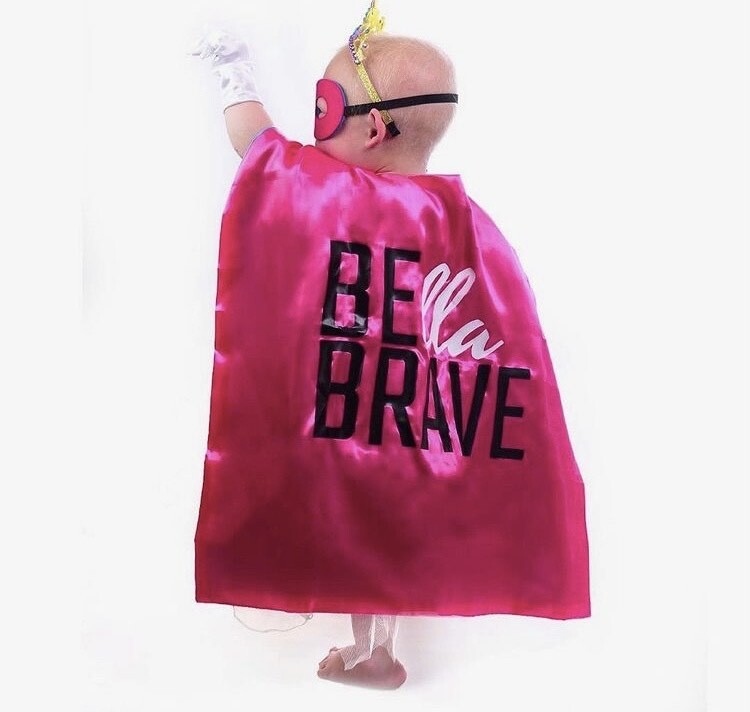
Bella and Kyla also work together to run Bella Brave, an organization created to give back to the community and to inspire others. Their inspirational message is consistent throughout all of their various platforms, and it’s the one most important for them to get across.
When I asked Kyla what she’s looking forward to, she noted that’s she’s excited to connect with other caregivers in similar situations and to finally join the post-transplant community.
You can find the dynamic duo of Bella and Kyla on TikTok and Instagram @kylact and on their website, bella-brave.com.
This is a recap of the first webinar – Living Donors and the Transplantation Process – in the Lyfebulb-Columbia University/New York-Presbyterian Hospital patient information and education series, which is sponsored by Veloxis Pharmaceuticals.
Panelists and moderators included:
- Mark A. Hardy, MD, PhD (Hon), FACS – Auchincloss Professor of Surgery, Director Emeritus and Founder of the Transplantation Program at Columbia University Medical Center
- Karin Hehenberger, MD, PhD – Founder and CEO of Lyfebulb and visiting associate researcher at Columbia University
- David J. Cohen, MD, MA – Professor of Medicine (in Nephrology) and Medical Director of Kidney and Pancreas Transplantation at Columbia University Irving Medical Center/New York Presbyterian Hospital
- Hilda Fernandez, MD – Assistant Professor of Medicine (in Pediatrics) at Columbia University Irving Medical Center/New York Presbyterian Hospital and Vanderbilt Clinic
- Lloyd E. Ratner, MD, MPH, FACS, FICS (Hon) – Professor of Surgery and Director of Renal and Pancreatic Transplantation at Columbia University
- Carly Rebecca McNulty, RN, BSN, CCTC – Senior Pre-Transplant Coordinator at the Columbia Kidney and Pancreatic Transplant program
This session’s discussion centered on end-stage renal disease (ESRD) management before dialysis and transplant, what it’s like living with kidney disease and what can be done to prevent further progression, as well as treating the patient in the disease journey.
The kidney has several roles – one being regulating fluid balance. The human body takes in more salt and water than it needs, and whatever isn’t utilized is excreted in the form of urine. The kidney also regulates mineral content in the blood, such as potassium, phosphorus, and calcium levels and clears waste products of metabolism like proteins and nitrogen. Lastly, it regulates blood counts, preventing anemia. If any of these functions aren’t properly regulated, one reason may be that a person has kidney disease.
In adults, the cause of kidney disease is primarily diabetes, high blood pressure (hypertension), or other autoimmune diseases that cause nephritis, which is inflammation of the kidney. Function can be preserved by maintaining healthy blood pressure and blood glucose levels and monitoring other body functions. In children, the primary cause of kidney disease is congenital issues, which are primarily determined before birth or at infancy due to infections, proteins, or blood found in the urine. A kidney biopsy is the best way to determine the presence and source of kidney disease. Sometimes an ultrasound or a CAT scan can determine the disease as well.
If a patient is showing symptoms of severe kidney disease such as nausea, severe fatigue, and other complications, even with modified medications and diet, then proceeding with dialysis until a kidney transplant is available is the appropriate course of action.
Evaluation for transplant begins when kidney function (measured by “Glomerular Filtration Rate or GFR”) is around 15-20% of normal kidney function, and most people receive a transplant with around 10-15% of GFR.
A kidney transplant can either come from a deceased or living donor. In 2019, 41,000 people in the United States were newly placed on the waiting list for kidney transplants, and there were only about 23,000 kidney transplants done. This means that nearly 20,000 individuals who need transplants are not able to get them each year. The wait time for a deceased donor can be years, and there is a great need for more living donors.
In the last few years, research into genetically engineered organs from animals has advanced. In the first of its kind, a pig kidney was recently transplanted into a human with success, albeit very short term success. This was a temporary experiment, however, and there is still much to learn and advance in this field. Nevertheless, many clinicians and researchers continue to research advancements to make transplants more accessible and successful for patients.
Listen to the full webinar on our YouTube channel here to learn more about innovations and research involving dialysis and kidney transplants! You can also register for future webinars and view all past webinars on TransplantLyfe.
Lyfebulb and CVS Kidney Care®, a CVS Health® (NYSE:CVS) company, are pleased to announce 10 finalists for the 2022 Innovation Challenge: Accelerating Innovations in Kidney Disease to Improve Health Equity and Outcomes.
“Treatment options for those with the most advanced stages of chronic kidney disease haven’t changed in decades, and the ideas brought forward as a result of this challenge are energizing,” said Jesse Roach, MD, Senior Medical Director, Health Equity at CVS Kidney Care. “For too long, outdated treatments have failed to meet the needs of many, and we look forward to hearing from entrepreneurs on how we can improve kidney health for everyone, especially historically underrepresented populations.”
The finalists, who were co-selected by the Lyfebulb and CVS Kidney Care® teams, brought forward an array of strategic, creative, and scalable concepts to make kidney care more understandable, accessible, and equitable. The potential impact on patients and their care partners, as well as the feasibility and sustainability of innovations in the market, were considerations in the selection of the following finalists:
- Sathya Elumalai, Founder & CEO at Aidar Health
- Chet Bennett, Founder at C. Alan Foundation
- Bilal Naved, Co-Founder and COO at Clearstep
- Sharron Rouse, Founder & Executive Director at Kindness for Kidneys International
- Linda Lusis, VP of Strategic Partnerships at Mozzaz Corporation
- Jonathan Politzki, CEO at Nephra
- Dr. Minnie Sarwal, Founder & CEO at Nephrosant
Dalton Shaull, Co-Founder & CEO at OmniLife- Sarah Lee, Co-Founder & CEO at Relavo
- Shireen Abdullah, CEO at Yumlish
”We are very excited by this inspirational group of finalists who are not only committed to improving health outcomes for kidney-disease patients, but also to improving their access to high-quality care,” said Karin Hehenberger, MD, PhD, Founder and CEO at Lyfebulb. “They demonstrate a high degree of creativity and the potential to successfully break down the barriers kidney-disease patients face so that they may receive the care they need and deserve.”
The finalists will be joined by industry leaders spanning business, venture capital, technology, and health care industries, as well as public officials driving change for a two-day summit in Austin, Texas. Each finalist will present their solutions to an expert panel of judges on May 18-19, 2022, and one winner will be awarded a $25,000 prize to further the growth of their company.
To learn more about the Lyfebulb-CVS Kidney Care® Innovation Challenge, visit Lyfebulb.com.
About CVS Kidney Care®
CVS Kidney Care® is reimagining the future of kidney health – because patients deserve care that helps them live on their own terms. Our unmatched patient insights, grounded in the connectivity of CVS Health ®, link data and clinical knowledge to create a personalized approach that breaks down barriers to care, including systemic barriers that have led to disparities in kidney health. Our end-to-end approach is flexible and customizable to help support a truly patient-centered experience. No matter where people are in their kidney-health journey, we help them connect to an integrated network of options that make care easier to understand, more accessible, and suited to their needs.
We are changing kidney care as we know it, because the more than 37 million Americans living with chronic kidney disease deserve more than twentieth-century solutions. Learn more at cvskidneycare.com.
About Lyfebulb
Lyfebulb is an innovation accelerator that bridges the gap between patient communities and the healthcare industry by working directly with patients and care partners to generate insights and build new solutions to reduce the burden of living with chronic disease. Lyfebulb operates across 12 disease states and counting. For more information, see Lyfebulb.com, TransplantLyfe.com, and IBDLyfe.com, as well as Lyfebulb’s Instagram, LinkedIn, Twitter, Facebook, and Karin Hehenberger’s LinkedIn.
Featuring Karin
After Karin was diagnosed with severe kidney failure, her body continued to deteriorate. She remembers getting to a point that her “blood sugar was so brittle that [she] didn’t know if [she] would wake up.”
But, Karin was lucky. She received a kidney donation from a living donor – her father. Check out this video to learn more about her health and transplantation journey. And, read more about the process of becoming a living donor here.
Finally, follow along here and on Lyfebulb’s social-media accounts to get updates about our latest installments of the MyLyfe series, which covers our team and ambassadors’ stories about their health journeys.
Written by Ella Balasa
This is a recap of the first webinar – “Living with Chronic Kidney Disease: What are My Options? – in the Lyfebulb-Columbia University/New York-Presbyterian Hospital patient information and education series, which is sponsored by Veloxis Pharmaceuticals.
Panelists and moderators included:
- Mark A. Hardy, MD, PhD (Hon), FACS – Auchincloss Professor of Surgery, Director Emeritus and Founder of the Transplantation Program at Columbia University Medical Center
- Karin Hehenberger, MD, PhD – Founder and CEO of Lyfebulb and visiting associate researcher at Columbia University
- David J. Cohen, MD, MA – Professor of Medicine (in Nephrology) and Medical Director of Kidney and Pancreas Transplantation at Columbia University Irving Medical Center/New York Presbyterian Hospital
- Hilda Fernandez, MD – Assistant Professor of Medicine (in Pediatrics) at Columbia University Irving Medical Center/New York Presbyterian Hospital and Vanderbilt Clinic
- Lloyd E. Ratner, MD, MPH, FACS, FICS (Hon) – Professor of Surgery and Director of Renal and Pancreatic Transplantation at Columbia University
- Carly Rebecca McNulty, RN, BSN, CCTC – Senior Pre-Transplant Coordinator at the Columbia Kidney and Pancreatic Transplant program
This session’s discussion centered on end-stage renal disease (ESRD) management before dialysis and transplant, what it’s like living with kidney disease and what can be done to prevent further progression, as well as treating the patient in the disease journey.
The kidney has several roles – one being regulating fluid balance. The human body takes in more salt and water than it needs, and whatever isn’t utilized is excreted in the form of urine. The kidney also regulates mineral content in the blood, such as potassium, phosphorus, and calcium levels and clears waste products of metabolism like proteins and nitrogen. Lastly, it regulates blood counts, preventing anemia. If any of these functions aren’t properly regulated, one reason may be that a person has kidney disease.
In adults, the cause of kidney disease is primarily diabetes, high blood pressure (hypertension), or other autoimmune diseases that cause nephritis, which is inflammation of the kidney. Function can be preserved by maintaining healthy blood pressure and blood glucose levels and monitoring other body functions. In children, the primary cause of kidney disease is congenital issues, which are primarily determined before birth or at infancy due to infections, proteins, or blood found in the urine. A kidney biopsy is the best way to determine the presence and source of kidney disease. Sometimes an ultrasound or a CAT scan can determine the disease as well.
If a patient is showing symptoms of severe kidney disease such as nausea, severe fatigue, and other complications, even with modified medications and diet, then proceeding with dialysis until a kidney transplant is available is the appropriate course of action.
Evaluation for transplant begins when kidney function (measured by “Glomerular Filtration Rate or GFR”) is around 15-20% of normal kidney function, and most people receive a transplant with around 10-15% of GFR.
A kidney transplant can either come from a deceased or living donor. In 2019, 41,000 people in the United States were newly placed on the waiting list for kidney transplants, and there were only about 23,000 kidney transplants done. This means that nearly 20,000 individuals who need transplants are not able to get them each year. The wait time for a deceased donor can be years, and there is a great need for more living donors.
In the last few years, research into genetically engineered organs from animals has advanced. In the first of its kind, a pig kidney was recently transplanted into a human with success, albeit very short term success. This was a temporary experiment, however, and there is still much to learn and advance in this field. Nevertheless, many clinicians and researchers continue to research advancements to make transplants more accessible and successful for patients.
Listen to the full webinar on our YouTube channel here to learn more about innovations and research involving dialysis and kidney transplants! You can also register for future webinars and view all past webinars on TransplantLyfe.
Kevin Longino has been Chief Executive Officer (CEO) of the National Kidney Foundation since 2015. He first became involved with the organization in 2008 as a volunteer advocate, and in 2012 he joined the national Board of Directors. As CEO, Kevin leads a team headquartered in New York, NY, and field offices around the country. NKF is supported by thousands of volunteers nationwide and serves millions of patients and healthcare providers seeking support and education every year.
Before his tenure at NKF, Kevin held executive positions at Compaq Computer Corporation. from 1987-2000. After his own diagnosis with kidney disease, he became an entrepreneur, an angel investor, and mentor to several startup technology companies, including the successful start-up ClearFactr. Kevin served on the Board of Directors for Sears Hometown and Outlet Stores, Inc. and was member of its Audit Committee and Special Committee.
In 2004, Kevin received a life-saving kidney transplant after at-home peritoneal dialysis and is now 17 years “kidney strong”. He readily shares his story and uses his experience to help other kidney disease patients.
Kevin earned a post-graduate diploma in Financial Strategy from Oxford University, England. He holds a BS in Marketing and MBA from Louisiana Tech University. He lives in Greenwich, CT, with his wife.
Written By Alisha Hiebert
Willow Pill is a drag superstar who got her start in Denver, Colorado, before moving to Chicago, Illinois, where she currently resides. As a fan of drag, Willow is currently living the dream as a drag performer herself, and you may recognize her adorable, twisted and quirky drag from season 14 of RuPaul’s Drag Race.

But here’s something you might not know about Willow: she’s also a transplant recipient. Diagnosed with cystinosis, a rare, genetic disease categorized by abnormal buildup of the amino acid cystine, Willow always knew she would one day need a kidney transplant. Cystinosis can result in a buildup of crystals, which might result in blockages in the eyes, affecting the liver, and causing myopathy and muscular atrophy in the body.
At 13, Willow reached the point of kidney failure. As her family began testing to determine who would be the best match, Willow began hemodialysis. After a year of dialysis, Willow’s brother was determined to be the best match, and she received a kidney transplant from him in March of 2010.
A few years later, Willow began her drag career by performing in a student drag show at the age of 21. Drag is an outlet for the queer and transgender community, and Willow is no exception. However, what she didn’t realize going into drag was how much it would help her express not only her queerness, but her health issues, as well.
“When you’re young, you don’t realize the effect this will all have on you,” Willow said, referencing her lifelong experiences in the medical world. “You don’t realize the medical PTSD that’s there.”
Having battled illness her entire life, Willow came to terms with the fact that her life would never be “normal.”
“You end up grieving yourself,” Willow said when I asked her about how growing up with a genetic illness changed her. “You’re stuck between being alive and being dead.”
Drag helped her come to terms with her illness and transplant status. Even more so than being queer, her drag has been shaped by her experiences of loss and death. In a life marked by so much pain, from illness to transplant surgery, familial death to contending with being queer, drag became essential.
“It tethered me to being alive, to something that had so much joy and life in it,” Willow said.
Just watch a Willow Pill show and you’ll see her ability to turn trauma into something enjoyable to watch. She said she’s always had a gift for finding humor in awful things in order to reclaim her power.
Willow is now thriving as a transplant recipient. Despite bumps in the road, there have been no major complications and Willow and her medical team are hopeful for her future.
I asked her what she wanted to share with our community, and she was quick to say that life won’t look like the movies. But means of joy and celebration should, and can, still exist. The old dream of life is gone, but there is confidence and joy living outside of what that dream was. That’s why Willow is such an advocate about living life post-transplant. She wants others to know that thriving with your diagnosis is possible, and that life is meant to be celebrated.
We always knew this queen had a little bit of a sparkle in her eyes. You can find Willow Pill on this season of RuPaul’s Drag Race, streaming now on VH1, on instagram @willowpillqueen or on her website willowpill.com.