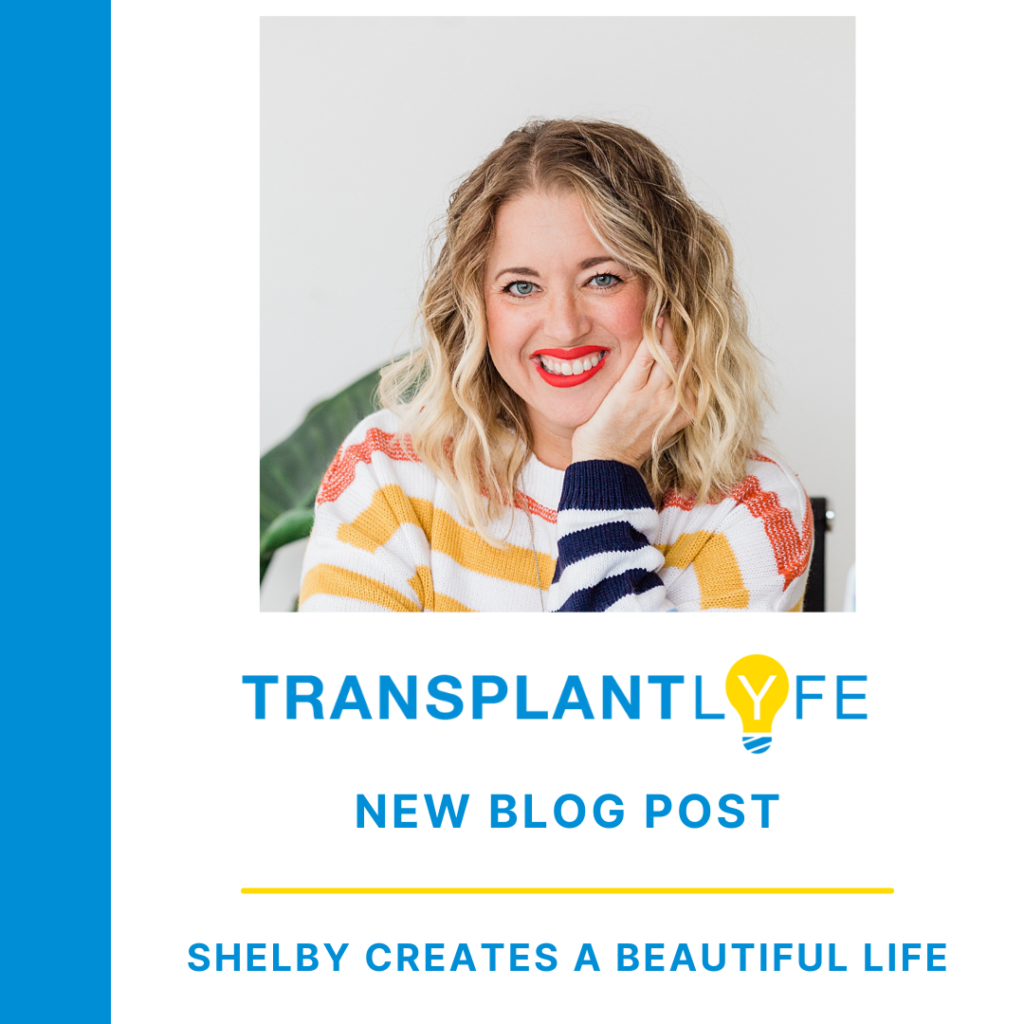
Shelby Hansen is a mom to four kids, an airforce wife and a kidney transplant recipient, and when I sat down to talk to Shelby, I noticed two things right away: her infectious energy and how much she advocates for wellbeing within the kidney community.
A year after the birth of her third child, while living in Florida, Shelby was diagnosed with stage 4 kidney disease. A seemingly healthy young mom, with no family history of kidney disease, Shelby received a diagnosis for Alport’s Syndrome, a genetic condition which inhibits the kidneys from properly filtering blood, allowing blood and proteins to pass into the urine.
In January of 2016, she was listed for transplant and Shelby’s time on the waitlist was anything but straightforward. On Father’s Day of 2016, only a few months after having been listed, a little surprise came in the form of a positive pregnancy test. With a GFR of 19, Shelby was terrified the pregnancy would have a negative impact on her kidney function, and on the health of her growing child. Juggling 3 other kids, air force life and failing kidneys made for an exhausting pregnancy, and despite it all, at 36 weeks gestation, Shelby delivered a healthy baby boy.
“He goes by his middle name,” Shelby told me, “Ezekiel-which means God will strengthen. I believe that through a very challenging time in my life, I was strengthened.”
In the summer of 2017 a move to Michigan meant changing transplant centers. And on the 4th of July the following year, the call Shelby had been waiting for came.
“I received the call for a deceased donor transplant. I had been matched with someone in California and they were flying the kidney to Michigan because I was 99% sensitized. Due to being highly sensitized, finding a match for me was nearly impossible. Doctors told me that if I didn’t get this particular kidney from California that day, it would likely be another 10 years before they’d find another match. “
The surgery went well, aside from low blood pressure, but acceptance of the new kidney wasn’t immediate. In the days after surgery, Shelby endured multiple scans and biopsies. They revealed that while blood was flowing to her kidney, the kidney wasn’t filtering as it was supposed to, and for reasons still unclear, it wasn’t until August that the new kidney began to filter.
This entire experience, with all its ups and downs, gave Shelby a passion for mental health and advocacy, which she put to use working as a mindset coach within the kidney community. Getting a transplant is an isolating and lonely experience, and one that isn’t well understood by the outside world. Everyday life is filled with an extraordinary amount of stress. Add in the misconceptions surrounding kidney disease and transplantation, and it’s enough to knock anyone off kilter.
Fears of the future, regrets of the past, an ableist society, and seemingly insurmountable challenges exist as a breeding ground for self doubt and discreditation of self. Having a witness to your pain, Shelby says, holding space for you and reframing the conversation, can be a pivotal moment in the journey from surviving to thriving. I asked Shelby for some simple ways to begin focusing more on taking care of your mental health as a transplant patient, and she told me that a great place to start was paying attention to what you’re already doing. Give yourself credit for things like feeding the kids, taking your medication, resting when your body needs to rest. A simple mindset shift can be the catalyst for healing. Of course it’s easier said than done, which is why coaches like Shelby are here to help!
As we ended our time together, I asked Shelby what she wanted to say to our transplant community, and what she wanted people to know. Her answer was two-fold, and sums it up just about as good as anything I’ve ever heard.
The first is feeling your feelings. The grief, the pain, the disappointment, the struggle, being present with whatever emotion is arising allows you to let go. Feelings buried alive never die, they just keep showing up in new ways. And the second part of that thought is knowing none of these things change your worthiness. You are loved, valuable, and your worth is infinite.
You have far more power than you give yourself credit for. And there’s a big world out there waiting just for you.
You can connect with Shelby on transplantlyfe @shelbycreates, on her instagram @shelbycreates.a.beautiful.life or on her website https://shelbykhansen.com/
SHe is also the host of Creating Your Beautiful Life podcast, available on spotify and apple podcast.
Self Coaching Practice with Shelby
Shelby shared with me a technique she calls self coaching, that I think could be beneficial to all of you. Feel free to apply her technique to your own life, and let us know how it went in the forum!
“I start by journaling out how I’m feeling about any situation. I divide the facts from the opinions and then pick out the thoughts (opinions) that I’m having that are causing me a lot of emotional pain. Then I look at one specific thought that I want to examine.
If I believe the thought that “life would be better without me having kidney disease”, I ask myself, “How does that thought make me feel”? For me, I feel disappointed when I think that thought.
The next thing I do is to allow and process the pain. So I let myself feel the feeling of disappointment–because that’s what my body wants to do. I relax into disappointment, I breathe into it, and I let it go where it wants to in my body. I name where I feel it, what it looks like, the shape, the color, the consistency. I stay present with the emotion until it begins to loosen in my body.
Once I have allowed the emotion and let my body process the emotion (because that’s what bodies are made to do), then I can decide if I want to keep the thought “life would be better without me having kidney disease” or if I want to shift into a new perspective. And often, a new perspective will present itself. For the situation of my diagnosis of kidney disease, I’ve often realized that it’s just as true that “My life is amazing because of what kidney disease has helped me discover about myself”. This thought feels more empowering to me and is something I actually want to believe. So I can decide that I want to focus on believing this new thought on purpose.
My worthiness did not change from believing one thought over another, but my experience did. I witnessed myself through the disappointment, and I’m allowing the empowered thoughts to come through because that’s the next experience I want to deliberately choose.
This process of witnessing and experiencing myself has been key to my healing. I’ve also done this process with a coach when I’m too caught up to have the clarity to see what my brain is doing in the moment. Self-coaching is a tool that I use daily to help in my emotional healing process.”
Written by Alisha Hiebert
Turned Leading Advocate
By Alisha Hiebert
If you’ve been around the transplant community for any length of time, you’ve probably heard about TRIO. TRIO stands for Transplant Recipient International Organization, and its goal is simple: to support transplant patients. Founded in 1987 by Dr. Tom Starzyl and his patients, the organization operates in ‘chapters’ both on the domestic and international levels. The goal is to educate and advocate for patients, and as a whole, TRIO is widely recognized in the field of transplantation. I had the privilege of sitting down with the co-founder and president of TRIO’s Philadelphia chapter Jim Gleason.
In October of 1994, Jim received a heart transplant at the University of Pennsylvania in Philadelphia. His second chance at life, and the entry into his ‘bonus years’ as he calls them, inspired Jim to get involved in advocacy, and he worked with a local OPO (organ procurement organization) promoting the need for organ donors. It was here where Jim met his wife, Pam. Pam is a donor mom, having donated her son’s organs when he was killed in a bicycle accident in 1997.
I asked Jim why advocacy was so important to him, and he told me about his family. “At the time of tragedy,” Jim said, “in a distant family, they anonymously gave the gift of organ donation to save the life of this young father a distance away. How does one say thank you for that selfless gift? For me, it is in using that life extension to help many others who follow in my footsteps as they too face death, and possible organ transplant.”
Working with TRIO has served as an extension of Jim’s already existent advocacy, and a way to magnify his service. He says the collaborative work of TRIO allows them to reach far beyond what one individual could do alone. Most recently, a 7 year advocacy project was completed highlighting patient awareness on the risk of cancer post transplant, with 46 pages of action-based, fact-filled content.
Jim said it’s not a question of whether or not someone will donate their organs when they die. They are going to donate their organs, either to save someone’s life or to the ground. This way of framing the conversation makes the question much easier to consider and serves as a message for the community in deciding what to do with their organs when they no longer need them.
I asked Jim what advice he would give someone wanting to become involved in transplant advocacy and he said, “The life story of one’s organ transplant is so impactful in shaping the appeal of registering to be an organ donor when life is over. We must share that
amazing life adventure, as the most powerful message, to give hope for more
organs saving many more lives every day.” He urges people to simply get the message out there and to live a life that inspires others to donate.
If you are interested in finding out more about TRIO and what they do, or becoming involved in your local TRIO chapter, visit www.trioweb.org
By Alisha Heibert
Come meet Alisha and our transplant community on TransplantLyfe
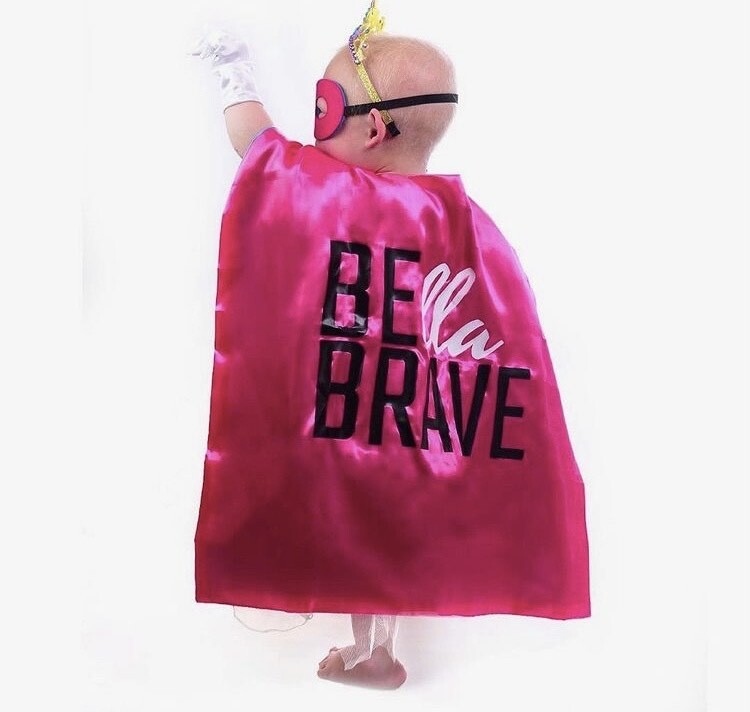
If you’ve been on TikTok, you’ve probably seen the joy and energy that is Bella. Bella, with the help of her mom Kyla, runs a popular TikTok account chronicling Bella’s unique health challenges, along with a healthy dose of fashion, beauty by Bella, and a lot of laughter.
Bella Thomson is a 9-year-old girl living in Saskatchewan, Canada, with her mom, dad and little brother. She was born with severe combined immunodeficiency (SCID); Hirschsprung disease, a rare bowel disease that took the entirety of her colon; and cartilage hair hypoplasia, a form of dwarfism. Throughout her life, Bella has spent more than 850 days in the hospital, received 21 surgeries, undergone a bone-marrow transplant, and received countless needles.
Bella is a trailblazer, in every sense of the word. She is the first pediatric patient to use Revestive in Alberta and Saskatchewan, a drug that has allowed Bella to go off total parenteral nutrition (TPN). You can often find her singing and dancing during long hospital stays, and her unique joy and spark has allowed her to not only survive but thrive, as well, in her unique situation.
Receiving a solid-organ transplant post bone-marrow transplant, especially in the pediatric population, isn’t a typical transplant circumstance. In 2020, it was deemed that Bella was in bowel failure, the first indication she needed a bowel transplant. The second was that Bella had only one usable, accessible blood vessel left in her entire body. Many ups and downs in her stability led to the placement and removal of multiple Broviac lines, destroying Bella’s vascular access.
In Canada, there are only two hospitals that perform solid-organ transplants in pediatrics – the Stollery Children’s Hospital in Edmonton, Alberta, and The Hospital for Sick Children (AKA SickKids) in Toronto, Ontario. Neither center is close to Bella’s hometown, which requires her to travel, potentially for months at a time during long stays. Due to her unique situation and prior bone-marrow transplant, the transplant team in Alberta (which would have been the closest location) decided they were not equipped to handle her complex care and denied her listing for a transplant. This meant Bella and Kyla had to fly across the country to receive lifesaving medical treatment.
Kyla told me about some of her struggles, including feeling like they were taking so much from a medical system that wasn’t equipped to deal with cases like theirs. Bella’s nurses would ask how Kyla was doing, and she could only reply that she felt defeated, taking all this help and being unable to give back. When Bella was listed for transplant and her condition became easier to manage upon receiving care at SickKids, it was only natural, Kyla said, for their family to begin giving back to the organizations and people that had given them so much.
“So many people supported us, and it was so healing to be the help and not just take the help,” Kyla said.
Kyla credits her strong support system with helping her get through everything. She and her husband lean on each other often, a real team in caring for not only Bella, but their son, Waylon, as well. Friends and family also generously offered their time, resources, and energy to lend the family a hand. The clearest message to Kyla in all of this was that she didn’t have to do it alone. “Being Bella’s mom, I learned I can’t handle everything on my own. And, also, I can do a lot more than I thought,” she recounted.
Bella and Kyla also work together to run Bella Brave, an organization created to give back to the community and to inspire others. Their inspirational message is consistent throughout all of their various platforms, and it’s the one most important for them to get across.
When I asked Kyla what she’s looking forward to, she noted that’s she’s excited to connect with other caregivers in similar situations and to finally join the post-transplant community.
You can find the dynamic duo of Bella and Kyla on TikTok and Instagram @kylact and on their website, bella-brave.com.
This is a recap of the first webinar – Living Donors and the Transplantation Process – in the Lyfebulb-Columbia University/New York-Presbyterian Hospital patient information and education series, which is sponsored by Veloxis Pharmaceuticals.
Panelists and moderators included:
- Mark A. Hardy, MD, PhD (Hon), FACS – Auchincloss Professor of Surgery, Director Emeritus and Founder of the Transplantation Program at Columbia University Medical Center
- Karin Hehenberger, MD, PhD – Founder and CEO of Lyfebulb and visiting associate researcher at Columbia University
- David J. Cohen, MD, MA – Professor of Medicine (in Nephrology) and Medical Director of Kidney and Pancreas Transplantation at Columbia University Irving Medical Center/New York Presbyterian Hospital
- Hilda Fernandez, MD – Assistant Professor of Medicine (in Pediatrics) at Columbia University Irving Medical Center/New York Presbyterian Hospital and Vanderbilt Clinic
- Lloyd E. Ratner, MD, MPH, FACS, FICS (Hon) – Professor of Surgery and Director of Renal and Pancreatic Transplantation at Columbia University
- Carly Rebecca McNulty, RN, BSN, CCTC – Senior Pre-Transplant Coordinator at the Columbia Kidney and Pancreatic Transplant program
This session’s discussion centered on end-stage renal disease (ESRD) management before dialysis and transplant, what it’s like living with kidney disease and what can be done to prevent further progression, as well as treating the patient in the disease journey.
The kidney has several roles – one being regulating fluid balance. The human body takes in more salt and water than it needs, and whatever isn’t utilized is excreted in the form of urine. The kidney also regulates mineral content in the blood, such as potassium, phosphorus, and calcium levels and clears waste products of metabolism like proteins and nitrogen. Lastly, it regulates blood counts, preventing anemia. If any of these functions aren’t properly regulated, one reason may be that a person has kidney disease.
In adults, the cause of kidney disease is primarily diabetes, high blood pressure (hypertension), or other autoimmune diseases that cause nephritis, which is inflammation of the kidney. Function can be preserved by maintaining healthy blood pressure and blood glucose levels and monitoring other body functions. In children, the primary cause of kidney disease is congenital issues, which are primarily determined before birth or at infancy due to infections, proteins, or blood found in the urine. A kidney biopsy is the best way to determine the presence and source of kidney disease. Sometimes an ultrasound or a CAT scan can determine the disease as well.
If a patient is showing symptoms of severe kidney disease such as nausea, severe fatigue, and other complications, even with modified medications and diet, then proceeding with dialysis until a kidney transplant is available is the appropriate course of action.
Evaluation for transplant begins when kidney function (measured by “Glomerular Filtration Rate or GFR”) is around 15-20% of normal kidney function, and most people receive a transplant with around 10-15% of GFR.
A kidney transplant can either come from a deceased or living donor. In 2019, 41,000 people in the United States were newly placed on the waiting list for kidney transplants, and there were only about 23,000 kidney transplants done. This means that nearly 20,000 individuals who need transplants are not able to get them each year. The wait time for a deceased donor can be years, and there is a great need for more living donors.
In the last few years, research into genetically engineered organs from animals has advanced. In the first of its kind, a pig kidney was recently transplanted into a human with success, albeit very short term success. This was a temporary experiment, however, and there is still much to learn and advance in this field. Nevertheless, many clinicians and researchers continue to research advancements to make transplants more accessible and successful for patients.
Listen to the full webinar on our YouTube channel here to learn more about innovations and research involving dialysis and kidney transplants! You can also register for future webinars and view all past webinars on TransplantLyfe.
Featuring Karin
After Karin was diagnosed with severe kidney failure, her body continued to deteriorate. She remembers getting to a point that her “blood sugar was so brittle that [she] didn’t know if [she] would wake up.”
But, Karin was lucky. She received a kidney donation from a living donor – her father. Check out this video to learn more about her health and transplantation journey. And, read more about the process of becoming a living donor here.
Finally, follow along here and on Lyfebulb’s social-media accounts to get updates about our latest installments of the MyLyfe series, which covers our team and ambassadors’ stories about their health journeys.
Written by Ella Balasa
This is a recap of the first webinar – “Living with Chronic Kidney Disease: What are My Options? – in the Lyfebulb-Columbia University/New York-Presbyterian Hospital patient information and education series, which is sponsored by Veloxis Pharmaceuticals.
Panelists and moderators included:
- Mark A. Hardy, MD, PhD (Hon), FACS – Auchincloss Professor of Surgery, Director Emeritus and Founder of the Transplantation Program at Columbia University Medical Center
- Karin Hehenberger, MD, PhD – Founder and CEO of Lyfebulb and visiting associate researcher at Columbia University
- David J. Cohen, MD, MA – Professor of Medicine (in Nephrology) and Medical Director of Kidney and Pancreas Transplantation at Columbia University Irving Medical Center/New York Presbyterian Hospital
- Hilda Fernandez, MD – Assistant Professor of Medicine (in Pediatrics) at Columbia University Irving Medical Center/New York Presbyterian Hospital and Vanderbilt Clinic
- Lloyd E. Ratner, MD, MPH, FACS, FICS (Hon) – Professor of Surgery and Director of Renal and Pancreatic Transplantation at Columbia University
- Carly Rebecca McNulty, RN, BSN, CCTC – Senior Pre-Transplant Coordinator at the Columbia Kidney and Pancreatic Transplant program
This session’s discussion centered on end-stage renal disease (ESRD) management before dialysis and transplant, what it’s like living with kidney disease and what can be done to prevent further progression, as well as treating the patient in the disease journey.
The kidney has several roles – one being regulating fluid balance. The human body takes in more salt and water than it needs, and whatever isn’t utilized is excreted in the form of urine. The kidney also regulates mineral content in the blood, such as potassium, phosphorus, and calcium levels and clears waste products of metabolism like proteins and nitrogen. Lastly, it regulates blood counts, preventing anemia. If any of these functions aren’t properly regulated, one reason may be that a person has kidney disease.
In adults, the cause of kidney disease is primarily diabetes, high blood pressure (hypertension), or other autoimmune diseases that cause nephritis, which is inflammation of the kidney. Function can be preserved by maintaining healthy blood pressure and blood glucose levels and monitoring other body functions. In children, the primary cause of kidney disease is congenital issues, which are primarily determined before birth or at infancy due to infections, proteins, or blood found in the urine. A kidney biopsy is the best way to determine the presence and source of kidney disease. Sometimes an ultrasound or a CAT scan can determine the disease as well.
If a patient is showing symptoms of severe kidney disease such as nausea, severe fatigue, and other complications, even with modified medications and diet, then proceeding with dialysis until a kidney transplant is available is the appropriate course of action.
Evaluation for transplant begins when kidney function (measured by “Glomerular Filtration Rate or GFR”) is around 15-20% of normal kidney function, and most people receive a transplant with around 10-15% of GFR.
A kidney transplant can either come from a deceased or living donor. In 2019, 41,000 people in the United States were newly placed on the waiting list for kidney transplants, and there were only about 23,000 kidney transplants done. This means that nearly 20,000 individuals who need transplants are not able to get them each year. The wait time for a deceased donor can be years, and there is a great need for more living donors.
In the last few years, research into genetically engineered organs from animals has advanced. In the first of its kind, a pig kidney was recently transplanted into a human with success, albeit very short term success. This was a temporary experiment, however, and there is still much to learn and advance in this field. Nevertheless, many clinicians and researchers continue to research advancements to make transplants more accessible and successful for patients.
Listen to the full webinar on our YouTube channel here to learn more about innovations and research involving dialysis and kidney transplants! You can also register for future webinars and view all past webinars on TransplantLyfe.
Written By Alisha Hiebert
Willow Pill is a drag superstar who got her start in Denver, Colorado, before moving to Chicago, Illinois, where she currently resides. As a fan of drag, Willow is currently living the dream as a drag performer herself, and you may recognize her adorable, twisted and quirky drag from season 14 of RuPaul’s Drag Race.

But here’s something you might not know about Willow: she’s also a transplant recipient. Diagnosed with cystinosis, a rare, genetic disease categorized by abnormal buildup of the amino acid cystine, Willow always knew she would one day need a kidney transplant. Cystinosis can result in a buildup of crystals, which might result in blockages in the eyes, affecting the liver, and causing myopathy and muscular atrophy in the body.
At 13, Willow reached the point of kidney failure. As her family began testing to determine who would be the best match, Willow began hemodialysis. After a year of dialysis, Willow’s brother was determined to be the best match, and she received a kidney transplant from him in March of 2010.
A few years later, Willow began her drag career by performing in a student drag show at the age of 21. Drag is an outlet for the queer and transgender community, and Willow is no exception. However, what she didn’t realize going into drag was how much it would help her express not only her queerness, but her health issues, as well.
“When you’re young, you don’t realize the effect this will all have on you,” Willow said, referencing her lifelong experiences in the medical world. “You don’t realize the medical PTSD that’s there.”
Having battled illness her entire life, Willow came to terms with the fact that her life would never be “normal.”
“You end up grieving yourself,” Willow said when I asked her about how growing up with a genetic illness changed her. “You’re stuck between being alive and being dead.”
Drag helped her come to terms with her illness and transplant status. Even more so than being queer, her drag has been shaped by her experiences of loss and death. In a life marked by so much pain, from illness to transplant surgery, familial death to contending with being queer, drag became essential.
“It tethered me to being alive, to something that had so much joy and life in it,” Willow said.
Just watch a Willow Pill show and you’ll see her ability to turn trauma into something enjoyable to watch. She said she’s always had a gift for finding humor in awful things in order to reclaim her power.
Willow is now thriving as a transplant recipient. Despite bumps in the road, there have been no major complications and Willow and her medical team are hopeful for her future.
I asked her what she wanted to share with our community, and she was quick to say that life won’t look like the movies. But means of joy and celebration should, and can, still exist. The old dream of life is gone, but there is confidence and joy living outside of what that dream was. That’s why Willow is such an advocate about living life post-transplant. She wants others to know that thriving with your diagnosis is possible, and that life is meant to be celebrated.
We always knew this queen had a little bit of a sparkle in her eyes. You can find Willow Pill on this season of RuPaul’s Drag Race, streaming now on VH1, on instagram @willowpillqueen or on her website willowpill.com.
I chatted with Petter Björquist, one of the finalists for the CSL Behring Transplant Innovation Challenge, about his novel innovation for the future of transplantation.
His company, VERIGRAFT, is developing a method of creating personalized organs from donors without the requirement of immunosuppression, avoiding tissue rejection, infection, other side effects, and the high price tag associated with typical transplantation. Currently, they are developing non-vital organs, such as blood vessels and nerves. It is a two-step process that first takes off the donor’s cells – decellularization. This leaves an empty tube, which is the 3D structure scaffold of a blood vessel, for example. Yet without the cells, it has no identity. The second part of the process gives the organ an identity again – personalized with the new patient’s cells and other noncellular material. What’s unique about this innovation is that it only requires 50mL of blood to be incubated with the blood vessel scaffold for about a week. Then, the new organ is ready to be transplanted into the patient.

The inspiration behind this research
I asked Petter what his inspiration and driving force behind this research was and what propels the continued advancement.
Although he has no direct connection to transplant (He worked in the field of cell therapies for 25 years and saw many ill patients.), Petter sees the opportunities and the significant challenges for those suffering and in medical need. He often receives emails from patients who are hoping to be cured of their disease. They are his motivation.
“This is the best job in the world – it’s a scientific challenge and I’m also working towards solving patients’ problems,” Petter said. He added that being a finalist in the innovation challenge was an incredible experience, despite not actually winning.
As we know, performing research is very expensive. It requires hard work from many individuals, material consumption, clinical phase regulation, and administrative burdens, which all have to be financed. Although he didn’t win the Innovation challenge, the opportunity to share his innovation with a larger transplant-research community and potential investors helped him tremendously. He was also able to benchmark his innovation against others in the field who gave him useful input and asked questions that challenged and supported his business model. For him, coming in contact with the large ecosystem of the transplant community was truly a pleasure.
The Future of VERIGRAFT and personalized transplants
I asked Petter how he hopes this innovation will advance the health of patients, and his answer was quite simple: He hopes it will change people’s lives.
In the eight years since starting his research and company, it has already advanced so far – currently testing the solution in patients and examining a range of diseases to provide viable therapeutics. Petter hopes this innovation method ultimately changes the lives of people and allows them to have a much better quality of life. Those that are significantly hindered in their daily activities are in desperate need of health improvement. This innovation will hopefully provide just that.
To advance, Petter wants to see positive results from the current ongoing patient testing, before he expands the company, clinical trial sites, and business connections beyond Europe and into the US and Asia. The pipeline for the clinical testing and expansion for other indications will continue for the next three to five years. And, Petter’s long-term goals are to partner with a larger company that can help speed up development of these products and innovations and to expand this technology into larger vital organs. The current research is laying the groundwork for anticipated regulatory hurdles and securing financing from a positive track record with the current study outcomes.
The transplant field is filled with many heartbreaking and inspiring stories. Some linger deep in the soul and provoke action. This is the situation my friend, Denise, found herself in. Denise is a heart-transplant recipient herself who, in the middle of her own personal transplantation experience, started the HeartFelt Help Foundation.
Having been sick her entire life, the medical world wasn’t new to Denise. Prior to her lifesaving transplant, Denise had been shocked multiple times, had 3 ICD’s, and had more hospital stays than she could keep track of. Despite knowing her situation would almost certainly end in transplant or death, she believed a heart transplant was something that wouldn’t happen to her.
In December 2017, Denise was given the news by her doctor that without a transplant she wouldn’t survive more than a year. And so Denise went home and planned her funeral.
She selected music and spoke to her pastor. And, upon finalizing her last wishes, Denise endured a ventricular tachycardia attack.
Denise was rushed to the hospital via ambulance, and after multiple hospital transfers, she arrived at Stanford where she would wait until a heart became available.
Three weeks after being admitted, at 11:30 pm on January 30, 2018, a call came. There was a heart that had become available, and while it was high risk, it was Denise’s if she chose to accept. She called her husband on the phone and they discussed this offer, which she describes as feeling more like a real-estate transaction than being given a second chance at life.
The surgery took a long 12.5 hours. Due to internal bleeding, Denise had a follow-up surgery later that night, and again a week later. She faced infection, both types of rejection, and her post-transplant hospital stay ended up being far longer than the stay she faced prior to receiving her new heart.
In April of 2018, Denise returned home, and in July, she began rehab and the slow process of learning how to live again with a new heart. As she recovered, Denise made a vow to live as though her donor was watching. And in the midst of rehabilitation and her own complicated recovery, something shifted.
In a waiting room, she overheard a conversation where someone would be moved down the transplant list since they could not provide adequate funding for post-transplant housing. And, Denise, a firecracker of a woman still recovering from her own complicated surgery, knew deep down in her soul that this wasn’t ok, that no one should be denied lifesaving organs because of their financial or housing status, and that she would be the one to do something about it. Denise became the difference she longed to see in the world as she interrupted the meeting, in typical Denise fashion, and put her foot down, insisting she would find a way to gather the funds so this individual could have a safe place to stay post-transplant and not be moved down the list.
Enter the Heartfelt Help foundation. It began as an effort to raise money for one person’s post-transplant housing. But the lack of safe and affordable transplant housing close to major transplant centers doesn’t just affect one person, and once the fire had been ignited to make a difference, there was no way to simply turn it off. In 2020, Heartfelt Help Foundation became an approved non-profit organization with a focus on supporting transplant patients in California and providing post-transplant housing close to the hospital.
I could see the emotion on Denise’s face as she spoke, and her stories of those she has helped through her organization translated into pure joy. I felt it, too, as she explained that nonprofits are there to fill in the gaps and provide a safe place for people who have nowhere else to turn.
“Transplant is a new life,” Denise said. “And, it shouldn’t create additional worry in life.”
I asked Denise how, in the middle of her own struggle, she continues to reach out and provide for others, and she told me that it is from others that she draws her inspiration. Her sense of value comes from serving others, and in the end, it doesn’t matter what she has but how many lives she has been able to touch.
Tomorrow isn’t promised. And, if there was ever a time to make a difference, it’s now. Denise is a shining example of drawing from personal pain to create beauty and building a life full of thriving for herself and others post-transplant.

The first thing I noticed when I sat down with Amanda was her friendly and easy going personality. I recognized the tiredness that comes along with fighting for your life etched into her features – it was the same look I had worn for so many years – and yet she was eager to engage and converse with me. Her goal, she said, was to help people.
We’re living in the middle of a pandemic and this, Amanda reminded me, will only add to the number of people receiving organ transplants. She has a wonderful support system but not everyone has received the same support she has, and Amanda said if she can be part of the village to someone else that she has created for herself, it would make her entire experience worth it.
Amanda received her first heart transplant at 15. While other kids her age were worrying about prom and which boy liked them, Amanda had bigger things at hand. Taking multiple immunosuppressants a day, avoiding germs, staying compliant with her treatments, it all made Amanda fit in less with her peers and more with the adults in her life. Transplant causes one to mature, quickly, and this is something Amanda experienced firsthand.
When talking about her experience with transplant, she was quick to reveal that one of her biggest struggles throughout the entire process was that of dealing with her mental health. The entire body is analyzed prior to and post transplant and yet mental health is an area often overlooked.
“I knew I needed a therapist, so that’s when I got one,” Amanda states, and it’s a sentiment I fully agree with. Transplantation is a process that takes a toll not only on the physical body but also the mental one, but there is little to no support for this invisible battle. And Amanda says she feels there should be greater emphasis put on the mental health journey following transplant.
She is currently back on the list, this time for a new heart and kidneys, despite doing everything right. She was compliant with her treatment, took all the medications prescribed to her, and yet the blow of knowing this failure of her organs took place as a result of the medication prescribed to save her life, she says, is her current stand out moment of the entire process.
Despite current struggles, Amanda looks back on her transplant as the biggest gift. Her overall experience has been incredibly positive, and her heart provided her with the opportunity to graduate high school, attend college and study abroad for a semester. She is an amazing chef who has worked with transplant patients regarding their diet and in hospitals hoping to make a change in the hospital menu we all love to hate. She works with her local organ procurement center, is the spokeswoman for the national heart association and records an amazing podcast called ‘Unfiltered survivors”.
I asked Amanda what inspires her to keep going and she said, “Why not?” It’s as simple a sentiment as they come, and yet those two words leave a profound impact. Amanda’s desire to help others penetrates through all that she does, and she says it is the driving force behind her fight.
“It’s all worth it,” Amanda told me, even in the midst of her current struggles. The pain, the struggle, the agonizing waiting period and the unexpected weight it imprints on both the mind and body, it’s worth it. Life itself is the most beautiful gift, a reminder I, too, find myself in need of often. It can be so easy to get swallowed up in your own journey, and I admire Amanda’s ability to keep sight of the bigger picture.
As our meeting together winded down, I asked Amanda if there was anything else she wanted to say while she had the floor. She said she credits TransplantLyfe to a lot of her success, and if this was available to her years ago she might be in a very different place now. “Put it all out there,” She said, “And use all the resources available to you. We have created this village that is so full of love and support, don’t hesitate to lean into it.”
You can connect with Amanda on TransplantLyfe: https://transplantlyfe.com/profile/ChefAmanda
Find her on social media: https://www.instagram.com/chefwithaheart/
Or listen to her podcast: https://unfilteredsurvivors.com/episodes/