July 26, 2022
Applications Open
Isabel Portero, MD, holds a PhD in Medicine with a background in the biomedical field.
She is the Founder and CEO of BIOHOPE, a startup dedicated to precision medicine, that promotes that each person receives personalized treatment based on individual physiology.
Before founding Biohope, Isabel acquired extensive experience -more than 15 years- as the Medical and R&D Director for different hospitals, foundations, universities, and biomedical/pharma companies, including big pharma (Merck and Roche) and biotech companies like Cellerix/Tygenics and Genetrix.
As she states, “I am firstly a medical doctor, which has driven everything. I would say that my background was critical because without it, I would have never launched Biohope. I have a 360° view of healthcare. My experience as a physician taught me the medical approach, while the pharmaceuticals industry gave me the marketing perspective. My experience in the biotech sector was important for developing the technology, and the university context clued me in on handling young people, which has also been very important.”
With her medical vocation and entrepreneurial spirit, she decided to run her own biomedical company by joining a multidisciplinary team of professionals, who together aimed to provide solutions to the unsolved medical needs in organ transplantation, a field to which Isabel has dedicated an important part of her career.
“When I worked at Merck Sharp & Dohme, one of the founders said that whenever you focus on the patients and what benefit them, you obtain economic benefits in return. Whenever you look for personal gain and lose that focus, you sink. If you work in the healthcare sector, you have to think about what will benefit the patient at all times. That’s the key to success.”
Dr. Portero began working on developing a test and founded Biohope in 2015. However, she found that creating a test was more challenging than she had anticipated. One challenge was that it proved difficult to grow immune cells in culture; another was scaling up the test while keeping it simple and able to give consistent results.
Despite the obstacles, her works has been recognized widely. Biohope received a grant from the European Commission for over € 3.4M in 2016 and Dr. Portero has received multiple awards over the years, including being listed in Forbes 100 most creative people in business (2018) and being named “Referent Women in Innovative Entrepreneurship” (2021).
She defines herself as a non-conformist and a lover of challenges. The desire to make a social contribution and the ability to identify a need in medicine led her to creating a startup.
Chet Alan Bennett aka Chef Bennet; Licensed Cosmetologist; School Owner; Salon Owner; Radio Host; Conference Host; Instructor; Motivational Speaker; Author; Executive Producer; and Founder of a non-profit. These are some of the many titles that Mr. Chet A. Bennett has held over the years while being a successful businessman. He is a proud graduate of Morehouse College with a BA in Religion and a Master’s Degree in Educational Administration and Supervision from Howard University. From holding contracts for the Correctional Corporation of America and the DC Department of Corrections, to coordinating conferences, producing the documentary, “Don’t Put Down the Clippers,” writing the book “My Business is the Beauty Business,” and owning 6 salons, two daycare centers, and a beauty school, Mr. Bennett has achieved great heights in all his endeavors. Although he has held a strong role in the beauty industry for over 29 years, C. Alan Bennett has been cooking and catering since 1992.
It wasn’t until he received a kidney transplant that he decided to spend the rest of his life dedicated to the culinary industry. He created The C. Alan Foundation to not only bring awareness to the kidney disease community, but to educate the community on how to create a healthy lifestyle. Under the foundation, The Kidney Kafe’ with Chef Benne’, and the Kidney Conversations Talk Show was created. C. Alan has become a sought-after caterer at the Bennett Career Institute, The Kidney Kafe Pop-ups; a personal Chef; an inspiring Chef host on a progressive cooking show that airs on The Urban Television Network; his YouTube channel, and his website kidney-kafe.com.
He is now partnering with Access Housing Inc., a Southeast DC Veteran’s Service Center catering meals for the homeless, and is set to air his cooking show this spring on DCTV. He also has a book about a healthy eating lifestyle coming out in April “From the Ground to the Gut.” Chef Benne’ started the Kidney Kafe Garden in Washington DC’s most economically challenged community growing spices and sustainable food for the local area. There is much more to come from C. Alan Bennett, as his impact in the culinary community has just begun.
The Lyfebulb-Veloxis Innovation Challenge will take place in October 2022 at Veloxis’ headquarters and was accepting applications through August 21, 2022. Selected applicants (i.e., finalists) have received an invitation to pitch their ideas and business solutions live to an expert panel of judges comprised of healthcare industry, medical, and patient leaders over the course of a two-day summit.
Prizes will be awarded to two finalists to further grow their companies. The Innovation Award will be presented to a for-profit company and includes $25,000 monetary grant. The Impact Award will be presented to a not-for-profit company and includes $15,000 monetary grant. Competing finalists may be considered by Veloxis for possible partnerships or investment opportunities.
In addition to the pitch competition, finalists will have the opportunity to engage with representatives from the patient community, industry, Lyfebulb, and Veloxis through workshops and learning hubs.
Through Lyfebulb and Veloxis Pharmaceutical’s shared commitment to patients and their loved ones, the Lyfebulb-Veloxis Innovation Challenge is seeking a wide range of solutions to improve lived-experience and outcomes for all those affected by transplant:
Solutions may any stage of the patient journey from pre-transplant to post-transplant longer-term management. Examples include, but are not limited to: organ supply, rejection, transplant procedures, comorbidities / side effects, patient education, and dialysis.
Applications were open globally; USA and international companies were encouraged to apply.
Strategic basis for addressing unmet needs facing patients, care partners, and/or professionals
Demonstrated ability of the innovation to address
these challenges
Potential of the innovation to improve outcomes or lived-experience of people affected by transplant
Degree of market impact and patient impact
Measurability of impact
Uniqueness to the market
Feasibility of development and implementation
Market sustainability
21
Applications closed on Sunday, August 21, 2022, at 11:59 PM EDT
2
The Challenge will take place
October 13 – 14, 2022
$25
One entrepreneur will be awarded the Innovation Award, including $25,000
$15
One entrepreneur will be awarded the Impact Award, including $15,000
The 2022 Innovation Challenge is one component of a larger partnership between Lyfebulb and Veloxis Pharmaceuticals, which is built upon a shared commitment to advancing patient-driven innovation in transplantation to attain improved outcomes for patients as well as care partners. The Lyfebulb Innovation Challenge, sponsored by Veloxis Pharmaceuticals, stems from the concept of the Lyfebulb Entrepreneur Circle established in 2015, which features individuals who have created a product and/or a company in response to their personal experiences with a chronic illness (through their own diagnosis or that of a loved one).
Additionally, Veloxis Pharmaceuticals is sponsoring a transplant education series in partnership with Lyfebulb and Columbia University. Information and recordings of webinars from this series can be found on TransplantLyfe, Lyfebulb’s digital platform for transplant patients and care partners, at www.transplantlyfe.com/webinars.

Lyfebulb is an innovation accelerator that bridges the gap between patient communities and the healthcare industry by working directly with patients and care partners to generate insights and build new solutions to reduce the burden of living with chronic disease. Lyfebulb operates across 11 disease states and counting and has launched a digital platform for patients and care partners experiencing transplants and inflammatory bowel disease (IBD). In addition to innovation challenges, Lyfebulb frequently hosts educational webinars and workshops for patient advocates.

Veloxis is a fully integrated specialty pharmaceutical company committed to improving the lives of transplant patients. Our focus is driving developments in transplant medicine. This focus enables us to maintain a committed presence both behind the scenes and in the action. Our hands-on approach to developing and distributing transplant medications sets us apart, with a support infrastructure that ensures seamless management of supply, access, and training needs.
Lyfebulb, in partnership with Columbia University, presents a virtual education series, sponsored by Veloxis Pharmaceuticals, to address key topics of living from late-stage disease through the transplantation process and beyond. Providing informative patient education is key to improving the patient experience, health communications, and health outcomes.
This session discusses an overview of pancreas transplant and how patients can prepare for a transplant. Questions for discussion were curated from the patient community.
Pancreas Transplant Surgery
When a person receives a pancreas, the person’s own pancreas remains in the body. The role of the pancreas is to manage blood sugar levels by making insulin and making digestive enzymes to break down food. The pancreas does not stop making these enzymes, so when the original pancreas is disconnected and the new one is placed in, these enzymes have to be sent somewhere for elimination from the body. It used to be connected to the bladder, from which it is easier to test for rejection from urine, but it is very uncomfortable as patients got inflammation of the bladder and significant pain. It is now done as a bowel drainage to help digest food. Originally, pancreases were not hooked up anywhere to eliminate the enzymes and this also caused serious inflammation in the gut.
Regarding the risk of transplant with a pancreas, surgical issues used to be the primary risk, but now it is the possibility of rejection – both in the shorter and longer term – that is paramount. Over time, the pancreas does fail and patients revert to needing insulin. The average life of a pancreas is between 7 to 15 years.
Immunosuppressive Therapies
The immunosuppression treatment regimen after transplantation is the same for pancreas as other organs like kidney transplant. Immediately after surgery, it is given intravenously, and then maintenance oral anti-rejection meds are dosed. The same medications are used independent of the organ that was transplanted. Across the country, different transplant programs make different decisions on which medications they prescribe the most. In more rural areas for example, there may be more infrequent access to care and follow up, so the use of long-term steroids is more common but reducing the amount of steroid being used is the goal of most centers.
The follow up care for pancreas transplant is longer than for organs like kidneys. In addition, renal immunosuppression can be reduced over time, but for pancreas this is riskier, especially if the patient received both a pancreas and kidney transplant from different donors, the risk of rejection is higher than getting either a kidney or pancreas by itself.
Pancreas Supply and Demand
Selection of pancreas donors is based on age, which significantly impacts how successful a transplanted pancreas will be. Donors also tend to be lean individuals with healthy lifestyles. Pancreas transplant is very selective and has to be a high-quality donor. And because of lifelong immunosuppressive medications requirements, pancreas transplants aren’t performed on younger people often because of the abbreviated average length of time a pancreas works successfully after transplant.
In addition to deceased donors, living donor pancreas transplants can be performed, where a partial pancreas is placed in the patient, however, this procedure is no longer commonly performed because of numerous complications, for the patient and for the donor as well.
As an alternative, islet cell transplant is a simpler procedure, but there is often a shortage of donor cells. It would require two separate donors, because there is an inflammatory reaction when the islets are injected into the liver, so a majority of the islet cells die quickly and there needs to be excess put into the body to account for the loss. The best results have 70% conversion of diabetes within 8 years because the cells get scarred and immune suppression is still required.
There are some clinical trials for using pig islet cells or growing them artificially – which is called induced pluripotent stem cells. Islet transplant surgery can also happen when they take the pancreas out from a person due to disease, and during surgery, remove the islet cells and put them into the kidney. This is called auto transplant and does not require immunosuppression since its cells emanate from the person’s own body.
Future webinars will cover transplant innovations in new drugs and what research is being done in xeno (non-human) organ transplant, and upcoming cell and organ repair therapies.
Listen to the full webinar and learn more about these conversations and information about life post-transplant. This, and future webinars can be found on transplantLyfe.com/webinars.
Panelists
Moderators
Shelby Hansen is a mom to four kids, an airforce wife and a kidney transplant recipient, and when I sat down to talk to Shelby, I noticed two things right away: her infectious energy and how much she advocates for wellbeing within the kidney community.
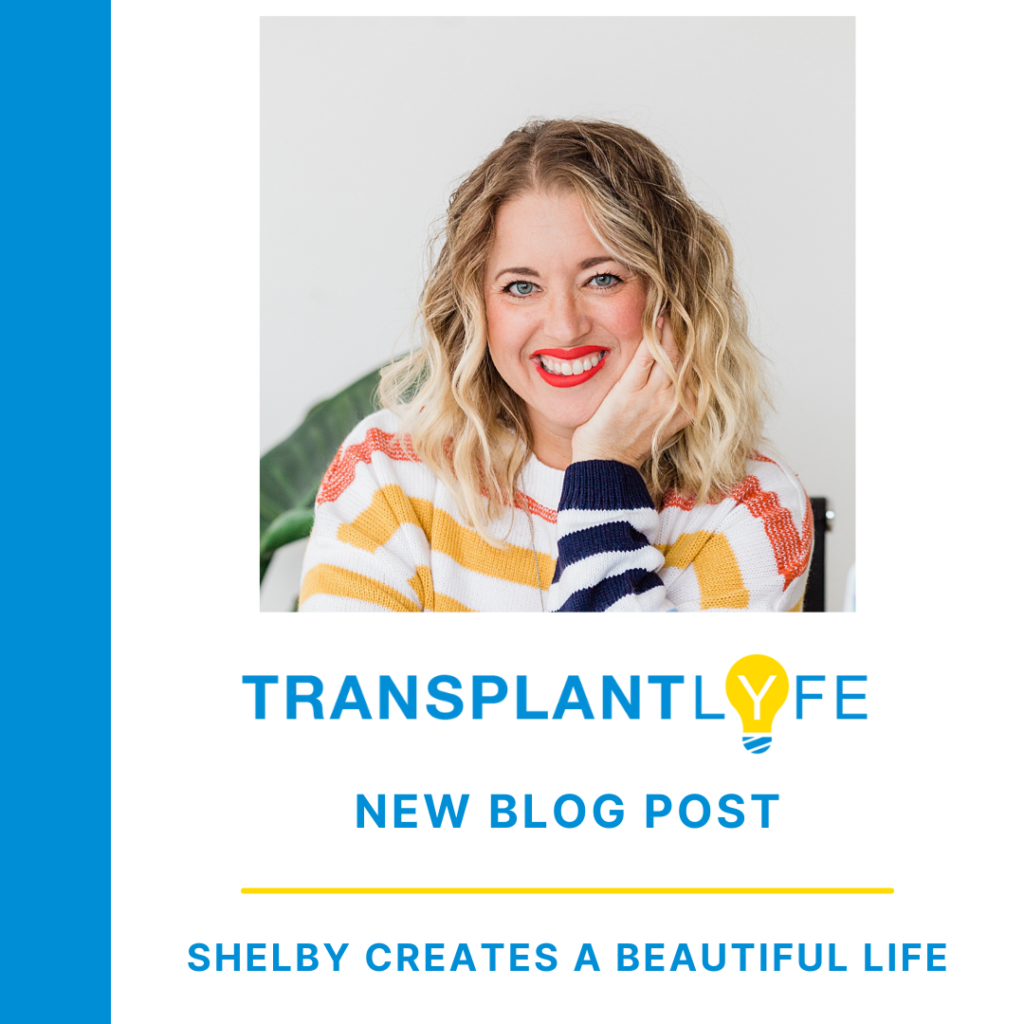
A year after the birth of her third child, while living in Florida, Shelby was diagnosed with stage 4 kidney disease. A seemingly healthy young mom, with no family history of kidney disease, Shelby received a diagnosis for Alport’s Syndrome, a genetic condition which inhibits the kidneys from properly filtering blood, allowing blood and proteins to pass into the urine.
In January of 2016, she was listed for transplant and Shelby’s time on the waitlist was anything but straightforward. On Father’s Day of 2016, only a few months after having been listed, a little surprise came in the form of a positive pregnancy test. With a GFR of 19, Shelby was terrified the pregnancy would have a negative impact on her kidney function, and on the health of her growing child. Juggling 3 other kids, air force life and failing kidneys made for an exhausting pregnancy, and despite it all, at 36 weeks gestation, Shelby delivered a healthy baby boy.
“He goes by his middle name,” Shelby told me, “Ezekiel-which means God will strengthen. I believe that through a very challenging time in my life, I was strengthened.”
In the summer of 2017 a move to Michigan meant changing transplant centers. And on the 4th of July the following year, the call Shelby had been waiting for came.
“I received the call for a deceased donor transplant. I had been matched with someone in California and they were flying the kidney to Michigan because I was 99% sensitized. Due to being highly sensitized, finding a match for me was nearly impossible. Doctors told me that if I didn’t get this particular kidney from California that day, it would likely be another 10 years before they’d find another match. “
The surgery went well, aside from low blood pressure, but acceptance of the new kidney wasn’t immediate. In the days after surgery, Shelby endured multiple scans and biopsies. They revealed that while blood was flowing to her kidney, the kidney wasn’t filtering as it was supposed to, and for reasons still unclear, it wasn’t until August that the new kidney began to filter.
This entire experience, with all its ups and downs, gave Shelby a passion for mental health and advocacy, which she put to use working as a mindset coach within the kidney community. Getting a transplant is an isolating and lonely experience, and one that isn’t well understood by the outside world. Everyday life is filled with an extraordinary amount of stress. Add in the misconceptions surrounding kidney disease and transplantation, and it’s enough to knock anyone off kilter.
Fears of the future, regrets of the past, an ableist society, and seemingly insurmountable challenges exist as a breeding ground for self doubt and discreditation of self. Having a witness to your pain, Shelby says, holding space for you and reframing the conversation, can be a pivotal moment in the journey from surviving to thriving. I asked Shelby for some simple ways to begin focusing more on taking care of your mental health as a transplant patient, and she told me that a great place to start was paying attention to what you’re already doing. Give yourself credit for things like feeding the kids, taking your medication, resting when your body needs to rest. A simple mindset shift can be the catalyst for healing. Of course it’s easier said than done, which is why coaches like Shelby are here to help!
As we ended our time together, I asked Shelby what she wanted to say to our transplant community, and what she wanted people to know. Her answer was two-fold, and sums it up just about as good as anything I’ve ever heard.
The first is feeling your feelings. The grief, the pain, the disappointment, the struggle, being present with whatever emotion is arising allows you to let go. Feelings buried alive never die, they just keep showing up in new ways. And the second part of that thought is knowing none of these things change your worthiness. You are loved, valuable, and your worth is infinite.
You have far more power than you give yourself credit for. And there’s a big world out there waiting just for you.
You can connect with Shelby on transplantlyfe @shelbycreates, on her instagram @shelbycreates.a.beautiful.life or on her website https://shelbykhansen.com/
SHe is also the host of Creating Your Beautiful Life podcast, available on spotify and apple podcast.
Self Coaching Practice with Shelby
Shelby shared with me a technique she calls self coaching, that I think could be beneficial to all of you. Feel free to apply her technique to your own life, and let us know how it went in the forum!
“I start by journaling out how I’m feeling about any situation. I divide the facts from the opinions and then pick out the thoughts (opinions) that I’m having that are causing me a lot of emotional pain. Then I look at one specific thought that I want to examine.
If I believe the thought that “life would be better without me having kidney disease”, I ask myself, “How does that thought make me feel”? For me, I feel disappointed when I think that thought.
The next thing I do is to allow and process the pain. So I let myself feel the feeling of disappointment–because that’s what my body wants to do. I relax into disappointment, I breathe into it, and I let it go where it wants to in my body. I name where I feel it, what it looks like, the shape, the color, the consistency. I stay present with the emotion until it begins to loosen in my body.
Once I have allowed the emotion and let my body process the emotion (because that’s what bodies are made to do), then I can decide if I want to keep the thought “life would be better without me having kidney disease” or if I want to shift into a new perspective. And often, a new perspective will present itself. For the situation of my diagnosis of kidney disease, I’ve often realized that it’s just as true that “My life is amazing because of what kidney disease has helped me discover about myself”. This thought feels more empowering to me and is something I actually want to believe. So I can decide that I want to focus on believing this new thought on purpose.
My worthiness did not change from believing one thought over another, but my experience did. I witnessed myself through the disappointment, and I’m allowing the empowered thoughts to come through because that’s the next experience I want to deliberately choose.
This process of witnessing and experiencing myself has been key to my healing. I’ve also done this process with a coach when I’m too caught up to have the clarity to see what my brain is doing in the moment. Self-coaching is a tool that I use daily to help in my emotional healing process.”
Written by Alisha Hiebert
June 22, 2022
Chet Alan Bennett aka Chef Bennet; Licensed Cosmetologist; School Owner; Salon Owner; Radio Host; Conference Host; Instructor; Motivational Speaker; Author; Executive Producer; and Founder of a non-profit. These are some of the many titles that Mr. Chet A. Bennett has held over the years while being a successful businessman. He is a proud graduate of Morehouse College with a BA in Religion and a Master’s Degree in Educational Administration and Supervision from Howard University. From holding contracts for the Correctional Corporation of America and the DC Department of Corrections, to coordinating conferences, producing the documentary, “Don’t Put Down the Clippers,” writing the book “My Business is the Beauty Business,” and owning 6 salons, two daycare centers, and a beauty school, Mr. Bennett has achieved great heights in all his endeavors. Although he has held a strong role in the beauty industry for over 29 years, C. Alan Bennett has been cooking and catering since 1992.
It wasn’t until he received a kidney transplant that he decided to spend the rest of his life dedicated to the culinary industry. He created The C. Alan Foundation to not only bring awareness to the kidney disease community, but to educate the community on how to create a healthy lifestyle. Under the foundation, The Kidney Kafe’ with Chef Benne’, and the Kidney Conversations Talk Show was created. C. Alan has become a sought-after caterer at the Bennett Career Institute, The Kidney Kafe Pop-ups; a personal Chef; an inspiring Chef host on a progressive cooking show that airs on The Urban Television Network; his YouTube channel, and his website kidney-kafe.com.
He is now partnering with Access Housing Inc., a Southeast DC Veteran’s Service Center catering meals for the homeless, and is set to air his cooking show this spring on DCTV. He also has a book about a healthy eating lifestyle coming out in April “From the Ground to the Gut.” Chef Benne’ started the Kidney Kafe Garden in Washington DC’s most economically challenged community growing spices and sustainable food for the local area. There is much more to come from C. Alan Bennett, as his impact in the culinary community has just begun.
Turned Leading Advocate
By Alisha Hiebert
If you’ve been around the transplant community for any length of time, you’ve probably heard about TRIO. TRIO stands for Transplant Recipient International Organization, and its goal is simple: to support transplant patients. Founded in 1987 by Dr. Tom Starzyl and his patients, the organization operates in ‘chapters’ both on the domestic and international levels. The goal is to educate and advocate for patients, and as a whole, TRIO is widely recognized in the field of transplantation. I had the privilege of sitting down with the co-founder and president of TRIO’s Philadelphia chapter Jim Gleason.
In October of 1994, Jim received a heart transplant at the University of Pennsylvania in Philadelphia. His second chance at life, and the entry into his ‘bonus years’ as he calls them, inspired Jim to get involved in advocacy, and he worked with a local OPO (organ procurement organization) promoting the need for organ donors. It was here where Jim met his wife, Pam. Pam is a donor mom, having donated her son’s organs when he was killed in a bicycle accident in 1997.
I asked Jim why advocacy was so important to him, and he told me about his family. “At the time of tragedy,” Jim said, “in a distant family, they anonymously gave the gift of organ donation to save the life of this young father a distance away. How does one say thank you for that selfless gift? For me, it is in using that life extension to help many others who follow in my footsteps as they too face death, and possible organ transplant.”
Working with TRIO has served as an extension of Jim’s already existent advocacy, and a way to magnify his service. He says the collaborative work of TRIO allows them to reach far beyond what one individual could do alone. Most recently, a 7 year advocacy project was completed highlighting patient awareness on the risk of cancer post transplant, with 46 pages of action-based, fact-filled content.
Jim said it’s not a question of whether or not someone will donate their organs when they die. They are going to donate their organs, either to save someone’s life or to the ground. This way of framing the conversation makes the question much easier to consider and serves as a message for the community in deciding what to do with their organs when they no longer need them.
I asked Jim what advice he would give someone wanting to become involved in transplant advocacy and he said, “The life story of one’s organ transplant is so impactful in shaping the appeal of registering to be an organ donor when life is over. We must share that
amazing life adventure, as the most powerful message, to give hope for more
organs saving many more lives every day.” He urges people to simply get the message out there and to live a life that inspires others to donate.
If you are interested in finding out more about TRIO and what they do, or becoming involved in your local TRIO chapter, visit www.trioweb.org
Tina is 43 years old, was born with the genetic disease cystic fibrosis and received a double lung transplant in 2014. Tina has worked in her passion of bodymind health and wellness for over 20 years helping hundreds of people with various conditions. She specialises now in Somatic Movement and Embodiment for trauma, anxiety and stress due to living with chronic illness, cancer or organ transplant. Tina facilitates online group courses, working with registered charities and other organisations and does one-on-one coaching for empowering individuals to understand how their bodymind is affected by their health and medical experiences, and how they can improve their resilience, emotional balance, anxiety and traumatic stress symptoms through a body based approach, whilst incrementally improving their relationship with their body, whatever their physical condition.
Tina has studied and qualified in Natural Nutrition, Regression Therapy, Yoga, Body Mind Centering, and is in continuing studies for Body Mind Psychotherapy, Embodiment and Somatic Trauma Therapy.
I am a chronic illness warrior, kidney transplant recipient, and life coach. I am an Air Force wife and mom to 4 kids. I received my gift of life and began coaching in 2018. I love traveling, surprises, and being outside as much as possible. I was trained as a Be Bold Master by Jody Moore in 2018 and received my life coach certification from The Life Coach School in 2021. Prior to life coaching, I studied the brain and neural science with a BS and Masters in Speech-language Pathology. I worked with stroke, traumatic brain injury, tracheostomy, and dialysis patients on swallowing, cognition, speech, voice, and language therapy. Now I work with amazing people helping them to stop stressing out about their health and create purpose-filled and intentional lives.
Kindness for Kidneys International Received an Honorable Mention
Lyfebulb, a patient-empowerment platform that connects patients with industry experts to support user-driven innovation, and CVS Kidney Care®, a CVS Health® (NYSE: CVS) company, are excited to announce that OmniLife was selected as the winner, and Kindness for Kidneys International received an honorable mention, at the 2022 Lyfebulb–CVS Kidney Care® Innovation Challenge: Accelerating Innovations in Kidney Disease to Improve Health Equity and Outcomes.
“True equity means everyone has the opportunity to attain their full health potential,” said Jesse Roach, MD, Senior Medical Director, Health Equity at CVS Kidney Care®. “We applaud OmniLife, Kindness for Kidneys and the other challenge finalists for their efforts to address barriers to care that make preventing and managing kidney disease difficult.”
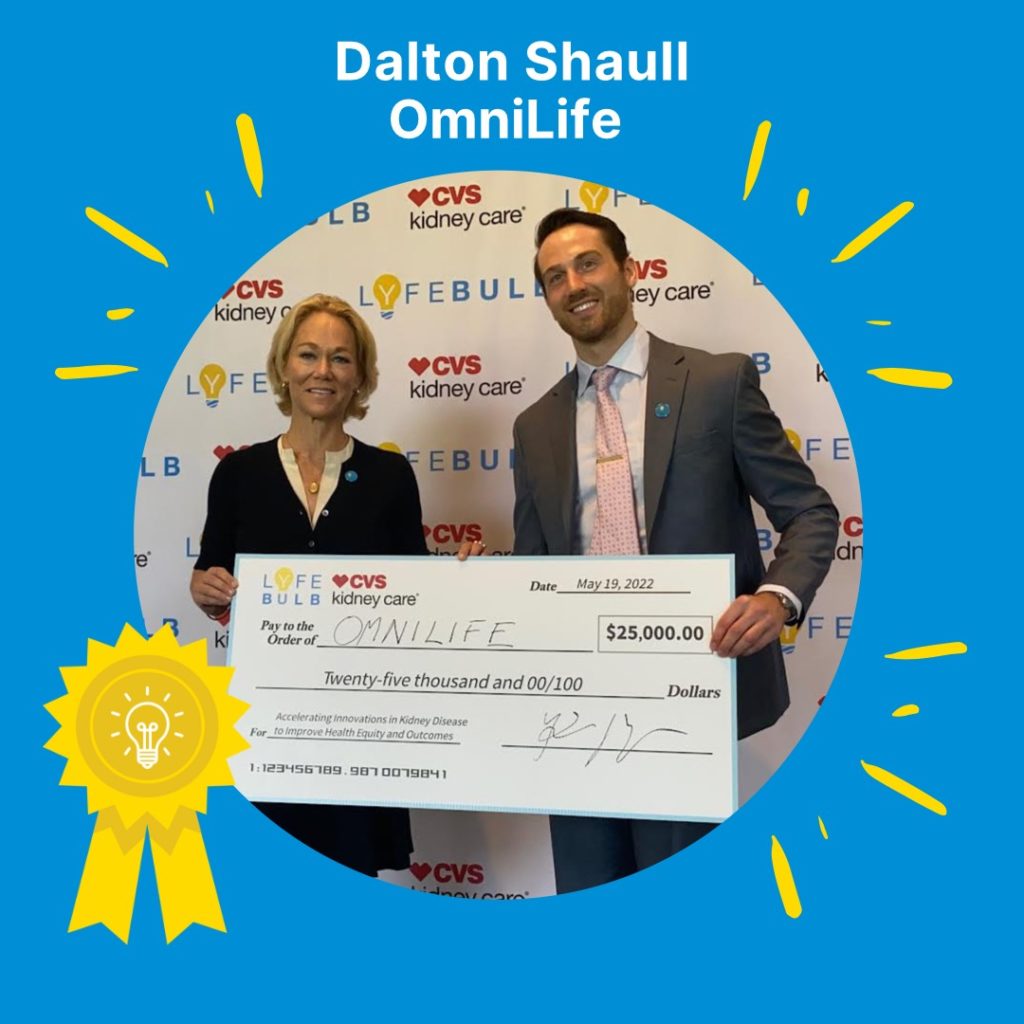
OmniLife was represented by Co-Founder and CEO Dalton Shaull and will receive a $25,000 monetary award to further develop its end-to-end communication and collaboration solution purpose-built for transplant teams to automate the intake and patient referral management process to provide better outcomes, reduce costs and create an optimal experience for clinicians and their patients.
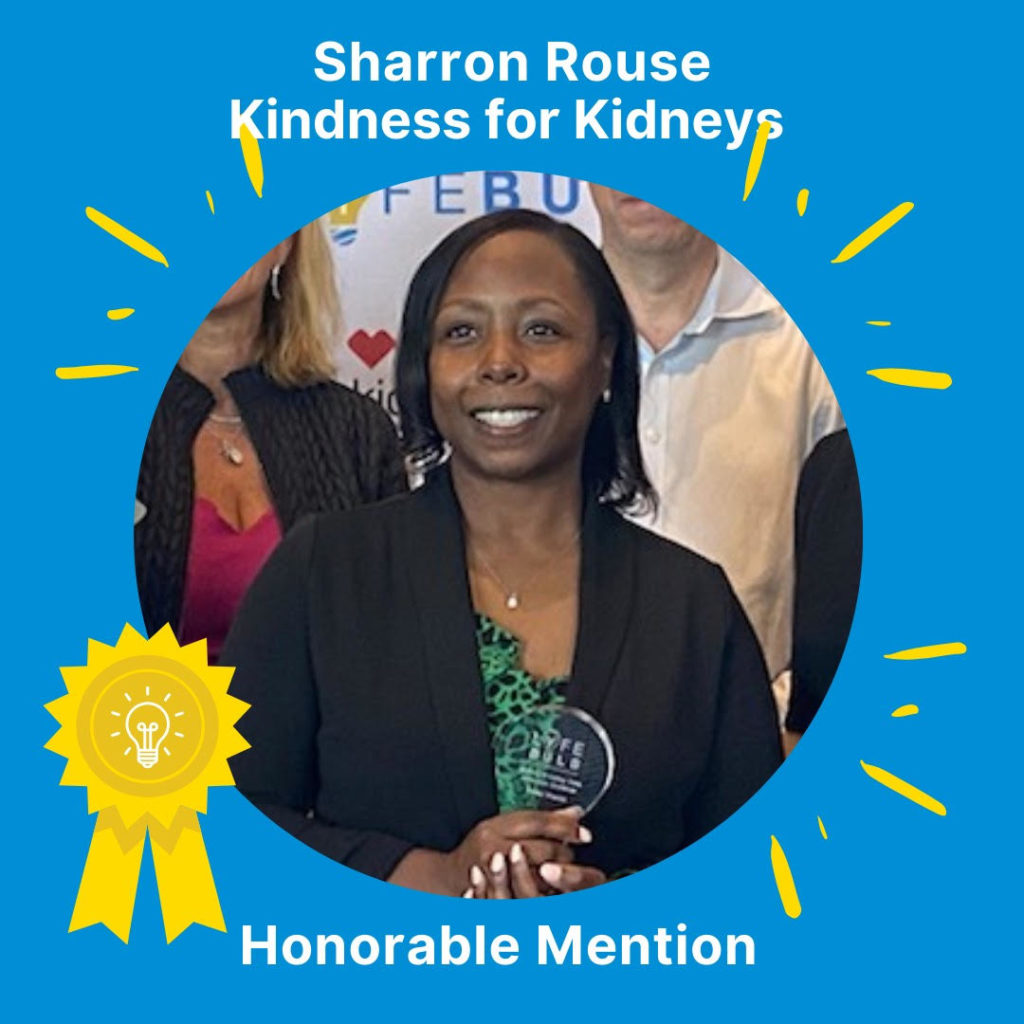
Additionally, the judges awarded Kindness for Kidneys International, represented by Founder and Executive Director Sharron Rouse, honorable mention for its dedication to educating, encouraging, and empowering kidney warriors and their families.
The 2022 Innovation Challenge took place in Austin, TX over two days on May 18-19. Before a panel of independent judges, each of the ten finalists pitched solutions for bringing equitable care to kidney disease patients. Finalists also had the opportunity to listen to keynotes from leaders in the kidney and health care space, as well as community health leaders in Austin, and take part in two small group learning sessions.
“The level of innovation presented by each finalist was impressive and inspiring, and we look forward to seeing their ventures grow and help to address the disparities that so often prevent access to care and negatively impact health outcomes for those in the CKD and ESRD community,” said Karin Hehenberger, MD, Ph.D., Founder and CEO of Lyfebulb. “As a person living with chronic kidney disease and having gone through a living donor kidney transplant, I was especially excited and encouraged by the potential impact these innovations will have on the patient community.”
To continue their commitment to patient entrepreneurship and to raising awareness about health inequities among those in the CKD and ESRD community, Lyfebulb and CVS Kidney Care® will be hosting a Fireside Chat with Dalton Shaull and Sharron Rouse, jury member Jennifer Miller of CVS Kidney Care®, and key opinion leader, Jesse Roach, MD, of CVS Kidney Care®, on Wednesday, June 1 at 4 p.m. EST. This virtual discussion is open to all community members, and more information can be found on Transplantlyfe.com/webinars.
To learn more about CVS Kidney Care®’s work to address equitable health care, visit cvskidneycare.com.
About CVS Kidney Care®
CVS Kidney Care® is reimagining the future of kidney health – because patients deserve care that helps them live on their own terms. Our unmatched patient insights, grounded in the connectivity of CVS Health ®, link data and clinical knowledge to create a personalized approach that breaks down barriers to care, including systemic barriers that have led to disparities in kidney health. Our end-to-end approach is flexible and customizable to help support a truly patient-centered experience. No matter where people are in their kidney-health journey, we help them connect to an integrated network of options that make care easier to understand, more accessible, and suited to their needs. We are changing kidney care as we know it because the more than 37 million Americans living with chronic kidney disease deserve more than twentieth-century solutions. Learn more at cvskidneycare.com.